How to Handle Your SR-22 Renewal Without Losing Your License
- An SR-22 is a form your insurer files with the state — it is not a separate insurance policy.
- Expect a one-time filing fee (often $15–$50) plus a premium increase that reflects the underlying violation.
- You must keep the policy continuous for the state's full requirement period, usually 1–3 years.
You know that sinking feeling when you realize your SR-22 is about to expire and you haven’t done a thing about it?
Yeah, me too.
Been there,done that, got the suspended license to prove it. (Okay, maybe not the last part.)
But seriously, SR-22 renewal is one of those things nobody talks about. Until it’s too late.
So let’s talk about it.
What even IS an SR-22 renewal anyway?
Here’s the thing most people get wrong.
SR-22 isn’t actually insurance. I know, I know, everyone calls it “SR-22 insurance” but that’s a lie we’ve all just accepted.
It’s really just a form your insurance company files with the DMV. A certificate. A piece of paper (digital now, but still).
Think of it as the DMV putting a leash on your insurance. They want to know the SECOND you let your coverage slip.
And when renewal time comes around? That leash gets checked.
Why your renewal date matters more than you think
Missing your SR-22 renewal isn’t like forgetting to pay Netflix.
There’s no “are you still watching?” grace period.
If your policy lapses – even for ONE day – your insurance company is legally required to file an SR-26 form with the state. That’s basically them tattling on you.
And then? Your license gets suspended. Again.
And that three-year clock you’ve been counting down? Yeah, it might restart from zero. Right back to square one.
I’ve heard stories of people who were literally ONE MONTH away from being done with their SR-22 requirement. Then they missed a payment. Just one. And bam. Clock reset. Another three years.
Don’t be that person.
How much does SR-22 renewal actually cost?
Okay so here’s where it gets messy.
The filing fee itself is tiny. Like $15 to $50 tiny.
But that’s not the real cost.
The real cost is what happens to your premium. And oof. It hurts.
Depending on what got you into this mess in the first place, your rates can jump anywhere from 40% to 300%.
A DUI? Expect to pay around $1,387 per year with some carriers.
Reckless driving? Maybe $835.
Driving without insurance? That’s actually the “cheapest” violation at around $567 per year.
And if you’re in Arizona, minimum coverage SR-22 runs about $184 a month. Full coverage? Pushes $346.
But here’s the thing nobody tells you.
Not all insurers penalize violations the same way. Some will crush you for a DUI. Others are more forgiving if you’ve done defensive driving courses.
Shop around. Seriously. The difference can be hundreds of dollars a year.
What happens if I move to another state?
Oh boy. This is where it gets fun.
Each state has its own rules. And they’re NOT the same.
Texas only requires SR-22 for two years.
California, Illinois, Washington? Three years.
Some states with really serious DUIs? Five years. Or even longer for repeat offenses.
And Florida and Virginia? They use something called an FR-44 instead. Same idea, but with higher liability limits. Double the coverage requirements in some cases.
Oh and some states like North Carolina and New York don’t use SR-22 at all for in-state reinstatement.
So if you move mid-requirement? You need to figure out what your new state wants. Fast.
A quick note about non-owner SR-22
Not everyone who needs an SR-22 actually owns a car.
Maybe you sold your car after the DUI. Maybe you never had one to begin with.
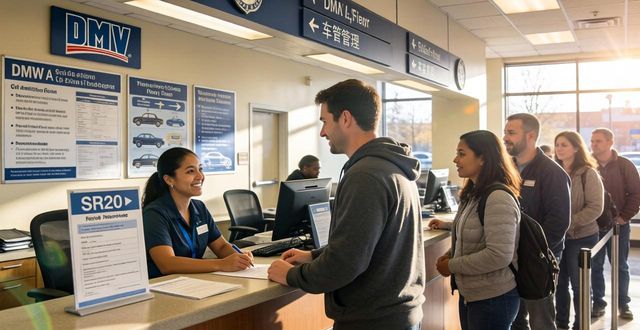
You can still get a non-owner SR-22 policy. It covers you when you drive borrowed or rented cars.
And interestingly enough, it’s usually cheaper than a standard owner policy. We’re talking $9 to $111 per YEAR in some cases.
Just don’t make the mistake of thinking it covers a car you use regularly. It doesn’t. That’s insurance fraud waiting to happen.
Real talk from someone who’s been there
I was scrolling through forums the other day (because apparently that’s my life now), and this one post really stuck with me.
Someone said their premium literally doubled overnight after their DUI. And they had no idea SR-22 was even a thing until their friend mentioned it.
Another person shared their co-worker’s story in Idaho – rates nearly doubled, had to carry SR-22 for three years, and bundling policies (which usually saves you money) actually made things worse. Splitting them turned out cheaper. Go figure.
The common thread in all these stories?
Nobody warns you about this stuff.
You’re already dealing with court dates, fines, maybe a suspended license. Then suddenly “oh by the way, you need this special filing for three years and if you mess up even once we’ll reset the clock.”
It’s exhausting.
Tips to keep your SR-22 renewal from becoming a disaster
Okay so here’s what actually works:
Set up automatic payments. Right now. Before you forget.
Call your insurer 45 days before your expiration date. Not 30. Not 14. Forty-five.
Confirm they’re still going to file the renewal with the state. Don’t assume.
If you’re switching companies? Make absolutely sure the new SR-22 is filed BEFORE the old one expires. Even a one-day gap is a lapse.
And here’s something most people don’t think about: after 12-18 months of clean driving, your “high-risk” status might start improving. Some carriers will offer better rates.
Don’t just stick with your first policy out of convenience. Shop around every renewal.
The defensive driving course thing – does it actually help?
Mixed reviews on this one honestly.
Some people say defensive driving courses helped them save a bit. Others say it barely moved the needle.
One forum user’s brother-in-law in Boise took a course after his DUI and his insurer only shaved off like 5%.
But here’s the thing – even if it doesn’t help much with rates, it shows the court and DMV you’re trying. And some insurers genuinely do offer discounts for it.
Worth asking your agent about. Worst case, you waste a Saturday. Best case, you save some money and look better on paper.
What if you just… don’t renew?
I mean, you could.
But here’s what happens. Your insurer notifies the DMV. Your license gets suspended. You can’t drive legally. Your SR-22 clock (the one you’ve been counting down) might reset. You pay reinstatement fees. And then you have to start the whole process over again.
Nebraska charges a $50 reinstatement fee just to get back in the system.
Nevada? Fines range from $250 to $1,000+.
And that’s just the state fees. Your insurance premiums will be even higher when you come back because now you have a lapse AND the original violation on your record.
So yeah. Don’t skip it.
One last thing
Look, I know SR-22 renewal is annoying. It’s expensive. It’s bureaucratic. It feels like the universe is punishing you for one mistake (or maybe a few mistakes, no judgment here).
And yeah, they told you there’d be consequences. But nobody told you about THIS consequence.
The good news? It doesn’t last forever. Most people only need SR-22 for three years. Some states two. It’s not a life sentence.
The bad news? You have to stay on top of it. No autopilot. No “I’ll deal with it later.”
Set reminders on your phone. Put it on your calendar. Tell your mom to remind you. Whatever it takes.
Because that one missed payment? The one that resets your clock? That’s the thing that turns three years into four. Or five.
And nobody wants that.
So go check your renewal date right now. Really. I’ll wait.
…Good. Now go call your insurance agent and make sure everything’s squared away.
You’ve got this.