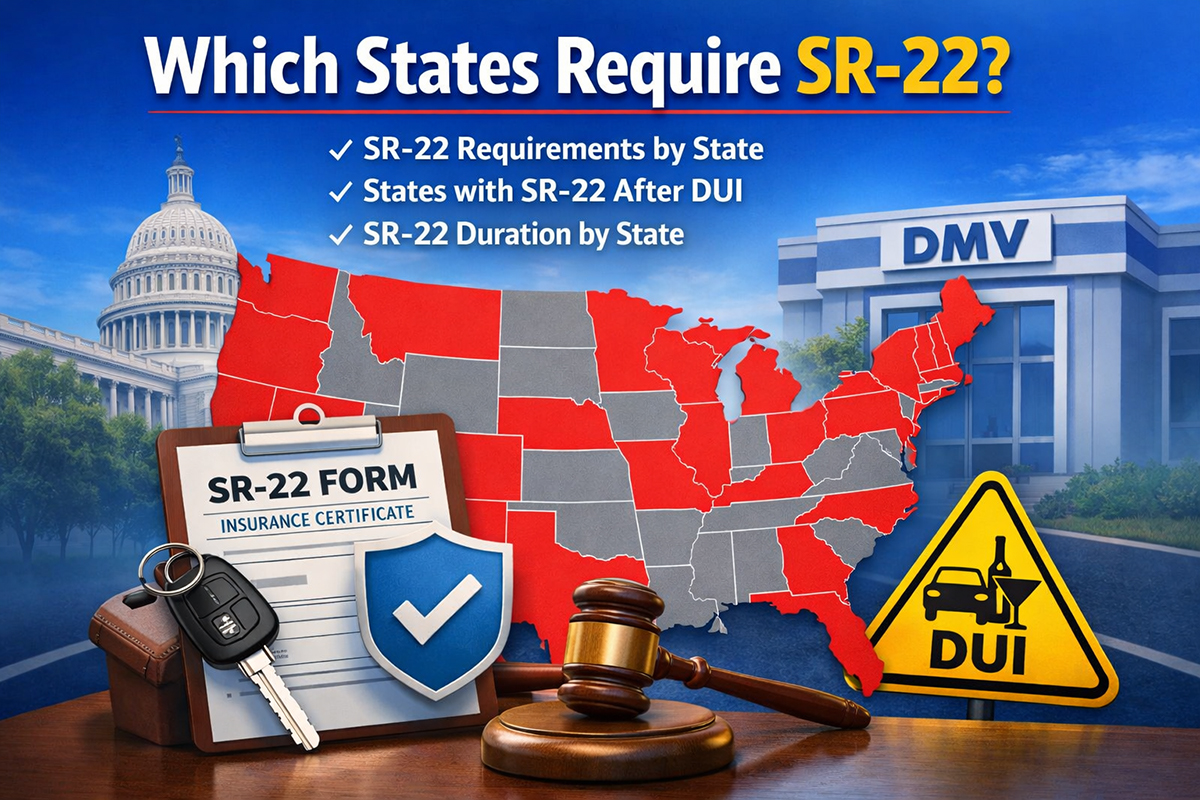
An overview of which U.S. states require SR-22 insurance filings after serious driving violations.
SR-22 is one of the most misunderstood legal requirements in the U.S. auto insurance system. Many drivers believe it is a type of insurance policy, when in fact, SR-22 is a state-mandated financial responsibility filing required after certain serious driving violations. Understanding which states require SR-22, how the rules differ, and how long the obligation lasts is essential for drivers seeking to reinstate or maintain their driving privileges.
This article provides a comprehensive legal overview of SR-22 insurance laws by state, focusing on DMV regulations, court mandates, and state-specific insurance requirements. Whether you are dealing with a DUI, license suspension, or uninsured driving violation, this guide explains SR-22 requirements by state in a clear, data-driven, and legally accurate way.
What Is SR-22 and Why Do States Require It?
An SR-22 is a certificate of financial responsibility filed by an insurance company with a state’s Department of Motor Vehicles (DMV) or equivalent authority. It proves that a driver carries at least the minimum liability insurance required by law.
States require SR-22 filings to:
- Monitor high-risk drivers
- Enforce court-ordered insurance compliance
- Reduce uninsured driving
- Ensure continuous coverage after serious violations
SR-22 is not issued by the DMV. Instead, your insurance company files the SR-22 on your behalf, and the state tracks compliance electronically.
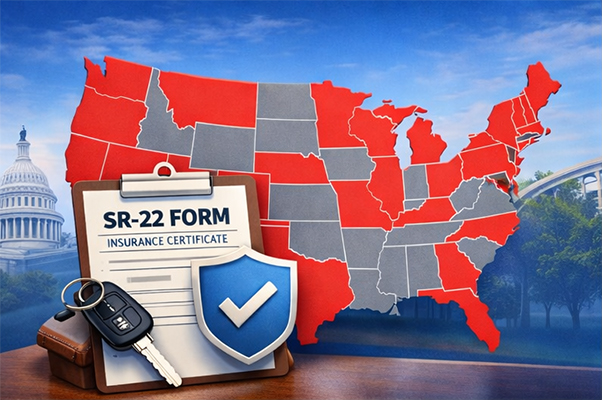
Do All States Require SR-22 Insurance?
A common question is: Do all states require SR-22 insurance?
The answer is no.
Not every U.S. state uses the SR-22 system. While most states rely on SR-22 filings to enforce financial responsibility, a handful use alternative forms or do not require post-violation filings at all.
Currently:
- Most states require SR-22 insurance
- A small number of states do not use SR-22
- Some states use state-specific alternatives, such as FR-44
Understanding whether your state mandates SR-22 is critical, as failing to file when required can result in license suspension, registration revocation, or extended penalties.
Which States Require SR-22 Insurance?
Overview
So, which states require SR-22 insurance?
The majority of U.S. states mandate SR-22 filings for drivers convicted of serious violations. These states rely on SR-22 to ensure ongoing compliance with minimum liability insurance laws.
Below is a verified and widely accepted list of states that require SR-22, either through the DMV or the courts.
List of States That Require SR-22 (Data Table)
The following table shows states that require SR-22 filing, typical triggers, and the standard SR-22 duration.
| State | SR-22 Required? | Common Triggers | Typical Duration |
| Alabama | Yes | DUI, uninsured driving | 3 years |
| Alaska | Yes | DUI, reckless driving | 3 years |
| Arizona | Yes | DUI, license suspension | 3 years |
| Arkansas | Yes | At-fault accidents | 3 years |
| California | Yes | DUI, repeat violations | 3 years |
| Colorado | Yes | DUI, excessive points | 3 years |
| Florida | No (uses FR-44) | DUI with high BAC | 3 years |
| Georgia | Yes | DUI, no insurance | 3 years |
| Illinois | Yes | Serious moving violations | 3 years |
| Indiana | Yes | DUI, habitual traffic offenses | 3 years |
| Iowa | Yes | DUI, license revocation | 2–3 years |
| Maryland | Yes | Driving without insurance | 3 years |
| Nevada | Yes | DUI, uninsured driving | 3 years |
| Ohio | Yes | DUI, multiple violations | 3–5 years |
| Oregon | Yes | DUI, license suspension | 3 years |
| Texas | Yes | DUI, no insurance | 2 years |
| Washington | Yes | DUI, reckless driving | 3 years |
Note: Duration may vary based on court orders or repeat offenses.
States With Mandatory SR-22 After DUI
One of the most common reasons for SR-22 filings is driving under the influence (DUI).
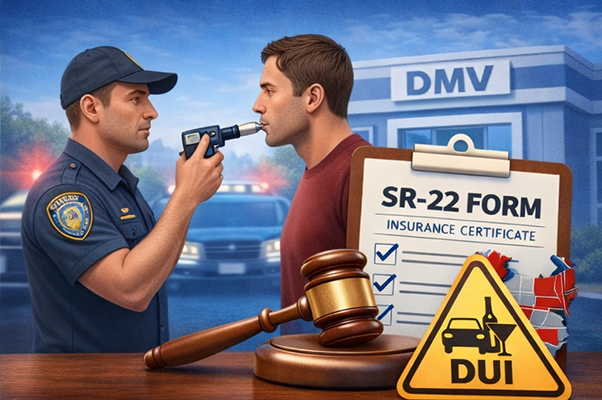
Many states impose mandatory SR-22 after DUI convictions, regardless of whether the driver owns a vehicle.
States with mandatory SR-22 after DUI typically include:
- California
- Texas
- Arizona
- Colorado
- Washington
- Illinois
- Georgia
In these states, a DUI conviction almost automatically triggers an SR-22 requirement as part of license reinstatement.
Courts may also require SR-22 in addition to:
- Alcohol education programs
- Ignition interlock devices
- Probation or fines

SR-22 Requirements by State: Key Legal Differences
While the concept of SR-22 is similar nationwide, SR-22 requirements by state differ in several important ways:
1. Filing Authority
- Some states require filing with the DMV
- Others use the Department of Public Safety or equivalent agency
2. Minimum Coverage Limits
- SR-22 requires state minimum liability coverage
- Coverage limits vary significantly between states
3. Duration of Requirement
- Typically 2–5 years
- Longer durations for repeat offenses or DUI with injury
4. Penalties for Lapse
- Any lapse may result in:
- Immediate license suspension
- Restarting the SR-22 period
- Additional fines or reinstatement fees
SR-22 Insurance Laws by State
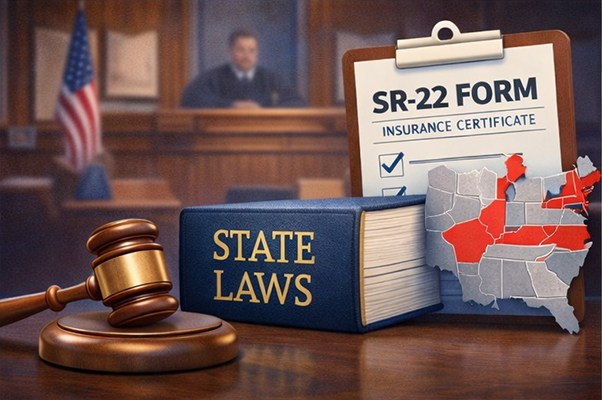
SR-22 insurance laws by state are rooted in each state’s financial responsibility statutes. These laws give states the authority to:
- Require proof of insurance after violations
- Monitor coverage electronically
- Penalize drivers for non-compliance
Key legal characteristics include:
SR-22 must be maintained continuously
Insurance companies must notify the state of cancellation
Drivers bear full responsibility for compliance, even if coverage lapses unintentionally
Because these laws are enforced at the state level, moving to another state does not automatically remove the SR-22 requirement.
How Long Is SR-22 Required in Each State?
Another high-intent search question is: How long SR-22 is required in each state?
In most cases:
- 2 years: Minor or first-time violations
- 3 years: DUI, uninsured driving
- 5 years or more: Repeat DUI or habitual offender status
The SR-22 clock typically starts after license reinstatement, not on the conviction date. Any lapse resets the timeline.
What If You Move to a Different State?
If you move while under an SR-22 obligation:
The original state still requires compliance
You may need an out-of-state SR-22 filing
Your insurer must file with the original state’s DMV
Failure to comply can result in nationwide license suspension through the Driver License Compact.

Non-Owner SR-22 for States That Require Filing Without a Vehicle
Many states that require SR-22 filing allow non-owner SR-22 insurance, which is ideal for drivers who:
- Do not own a car
- Borrow or rent vehicles
- Need license reinstatement only
This option satisfies legal requirements while often being significantly cheaper than owner policies.
Final Thoughts: Understanding Which States Require SR-22
Knowing which states require SR-22 insurance is critical for any driver dealing with serious traffic violations. SR-22 is not optional, and misunderstanding state requirements can lead to extended penalties, higher costs, and continued license suspension.
By understanding:
- States that require SR-22 filing
- SR-22 insurance laws by state
- How long SR-22 is required in each state
drivers can make informed, compliant decisions and regain legal driving status as efficiently as possible.
About the Author