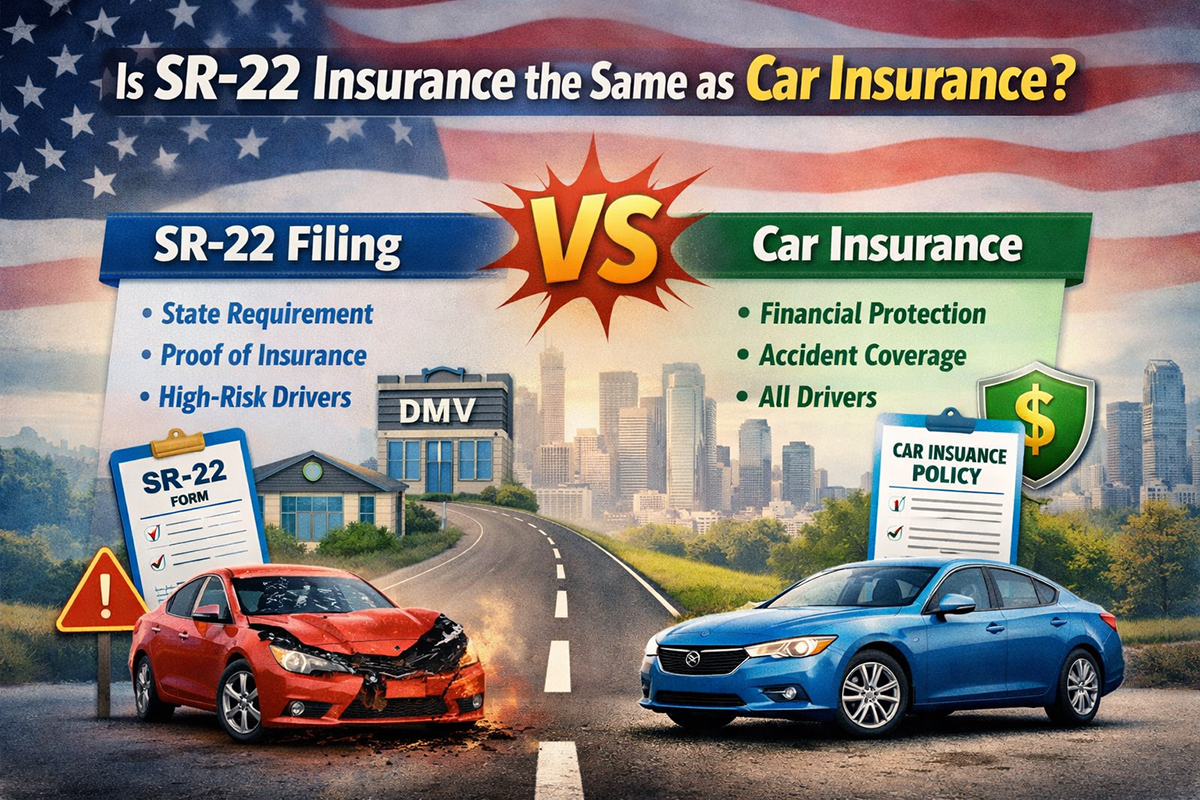
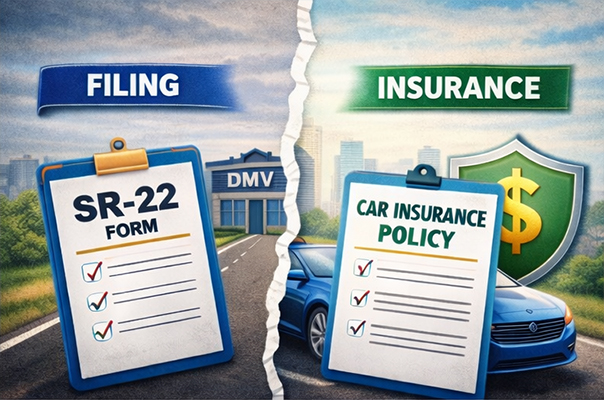
SR-22 is not the same as car insurance — it is a state-required filing linked to an auto insurance policy.
SR-22 is one of the most misunderstood terms in the U.S. auto insurance system. Many drivers believe it is a special type of high-risk insurance policy, while others assume it completely replaces standard car insurance. In reality, SR-22 plays a very specific legal and administrative role that is closely connected to, but fundamentally different from, traditional auto insurance.
This article, written for the Basics section of an SR-22–focused website, provides a comprehensive and professional explanation of what SR-22 is, how it works, who needs it, and why states require it. Most importantly, it answers a critical question many drivers ask after a suspension or serious traffic violation: Is SR-22 insurance the same as car insurance?
By the end of this guide, you will clearly understand the difference between SR-22 insurance and car insurance, how SR-22 filing works with car insurance, and whether you can legally drive with or without an SR-22 filing.
Understanding the Core Question: Is SR-22 Insurance the Same as Regular Car Insurance?
To answer this directly: No, SR-22 insurance is not the same as regular car insurance.
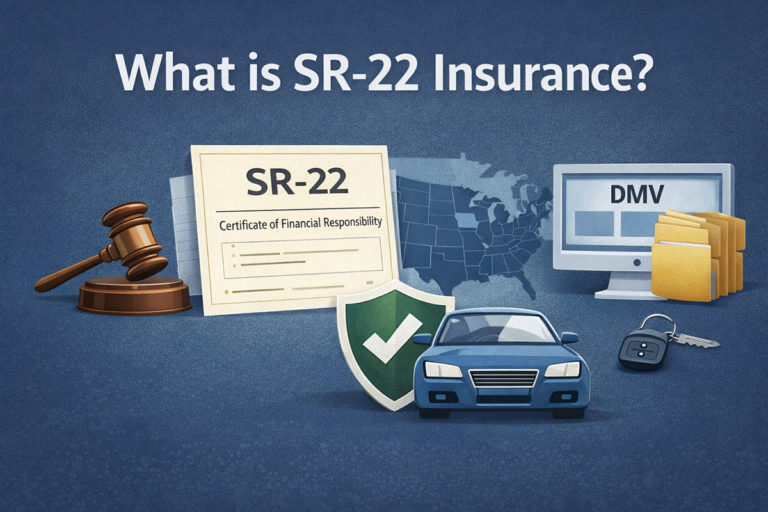
In fact, SR-22 is not insurance at all. It is a state-required document—also known as a certificate of financial responsibility—that proves you carry at least the minimum auto insurance coverage required by your state.
The confusion often comes from how closely SR-22 is tied to car insurance. You cannot file an SR-22 without an underlying insurance policy, which leads many drivers to assume SR-22 is simply another type of coverage. This misunderstanding has resulted in widespread misuse of the term “SR-22 insurance.”
To clarify this fully, we must break down both concepts separately.
What Is SR-22?
SR-22 Defined
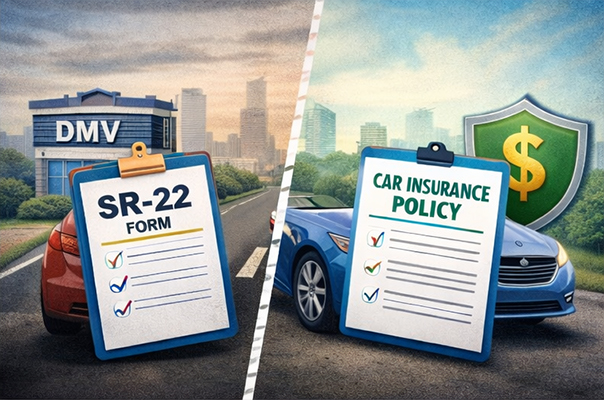
An SR-22 is a form filed by your insurance company directly with your state’s Department of Motor Vehicles (DMV) or equivalent authority. Its purpose is to certify that you meet the state’s minimum liability insurance requirements.
Legally, the SR-22 serves as proof that:
- You currently have valid auto insurance
- Your policy meets or exceeds state-mandated liability limits
- Your insurer will notify the state if your policy lapses, cancels, or expires
This last point is critical. The SR-22 is primarily a monitoring tool used by the state to ensure continuous compliance.
Is SR-22 a Type of Car Insurance or a Filing?
This question is one of the most searched online, and the answer is clear:
SR-22 is a filing, not a type of car insurance.
Your car insurance policy provides financial protection. The SR-22 filing simply verifies that protection to the state and keeps the DMV informed of your insurance status.
What Is Standard Car Insurance?
Purpose of Car Insurance
Standard auto insurance is a contract between you and an insurance company. It protects you financially in case of:
- Accidents
- Property damage
- Bodily injury
- Legal liability
- Theft or vehicle damage (if comprehensive or collision coverage is included)
Unlike SR-22, car insurance exists to protect you and others financially, not to report your compliance to the state.
Minimum Coverage vs. Optional Coverage
Most states require only liability insurance, which covers damages you cause to others. Optional coverages may include:
- Collision
- Comprehensive
- Uninsured/underinsured motorist coverage
- Medical payments or personal injury protection
An SR-22 does not change what your policy covers. It only confirms that you maintain at least the legal minimum.
SR-22 Insurance vs Standard Auto Insurance: Key Differences
Understanding SR-22 insurance vs standard auto insurance requires a side-by-side comparison:
| Aspect | SR-22 | Standard Car Insurance |
| Legal status | State filing | Insurance contract |
| Purpose | Prove financial responsibility | Provide financial protection |
| Issued by | Insurance company (filed with DMV) | Insurance company (policyholder) |
| Required for all drivers | No | Yes |
| Triggered by violations | Yes | No |
| Coverage provided | None | Yes |
This comparison highlights the difference between SR-22 insurance and car insurance clearly: one is administrative and legal, the other is financial and contractual.
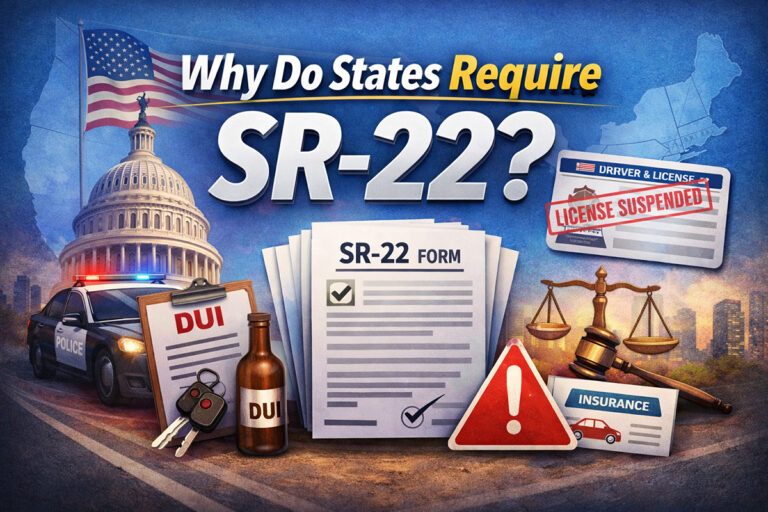
Why Do States Require SR-22?
States require SR-22 filings to manage high-risk drivers. These are individuals who have demonstrated a higher likelihood of causing accidents or violating traffic laws.
Common reasons SR-22 is required include:
- DUI or DWI convictions
- Driving without insurance
- License suspension or revocation
- Multiple serious traffic violations
- At-fault accidents without insurance
- Reckless driving convictions
By requiring SR-22, states ensure that these drivers remain insured continuously for a specific period, usually three years, though this varies by state.
SR-22 Insurance Requirements Compared to Car Insurance
When examining SR-22 insurance requirements compared to car insurance, the main difference lies in who enforces compliance.
- Car insurance is required by law, but enforcement is often reactive (tickets, fines, post-accident checks).
- SR-22 requirements are proactive and continuous. If your policy lapses, the insurer must notify the state immediately.
This means SR-22 drivers face:
- Stricter monitoring
- Immediate penalties for coverage lapses
- Possible license re-suspension if requirements are violated
Do You Need SR-22 in Addition to Car Insurance?
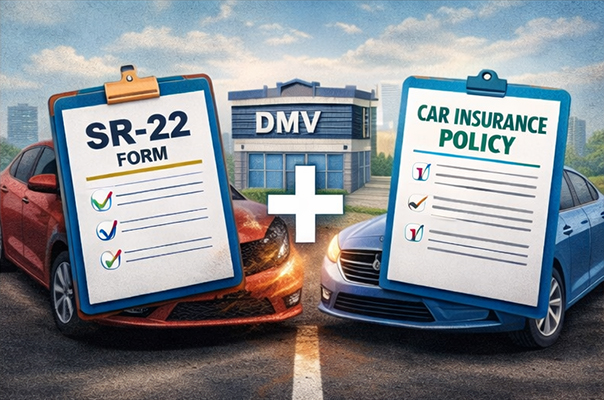
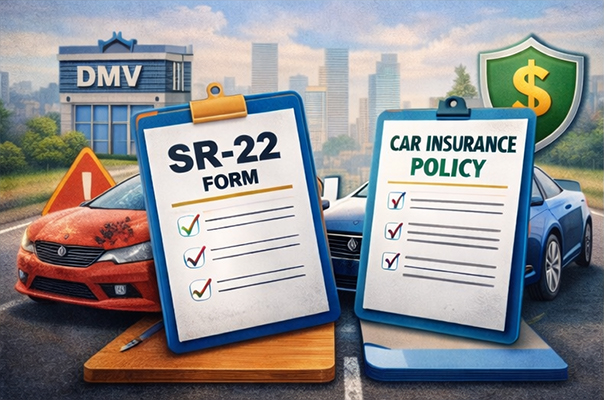
Yes. You need SR-22 in addition to car insurance, not instead of it.
Here is how it works:
You purchase a qualifying car insurance policy.
You request your insurer to file an SR-22 on your behalf.
The insurer submits the SR-22 to the state.
Your license is reinstated or remains valid as long as coverage is continuous.
Without car insurance, SR-22 cannot exist. Without SR-22 (when required), your insurance alone is not sufficient to regain legal driving privileges.
How SR-22 Filing Works With Car Insurance
Understanding how SR-22 filing works with car insurance helps prevent costly mistakes.
Step-by-Step Process
Determine requirement
The court or DMV notifies you that SR-22 is required.
Choose an insurer
Not all insurers file SR-22, so you must select one that does.
Purchase or modify a policy
This may be an owner or non-owner policy, depending on your situation.
Request SR-22 filing
The insurer files the SR-22 electronically with the DMV.
Maintain continuous coverage
Any lapse triggers an SR-26 notice and possible license suspension.

Who Needs SR-22?
SR-22 is not required for most drivers. It is only mandated for individuals classified as high risk under state law.
You may need SR-22 if you:
- Were convicted of a DUI or DWI
- Drove without insurance
- Had your license suspended or revoked
- Accumulated excessive points on your driving record
- Were involved in an uninsured at-fault accident
The requirement applies regardless of whether you currently own a vehicle.
Can You Have Car Insurance Without SR-22 Filing?
Yes, and most drivers do.
You can have car insurance without SR-22 filing if the state does not require it in your case.
However, if SR-22 is required and you fail to file it:
- Your license may remain suspended
- Your registration may be invalid
- You could face fines or jail time for driving illegally
Thus, the question is not whether insurance can exist without SR-22, but whether you are legally allowed to drive without it.
Owner vs Non-Owner SR-22 Policies
SR-22 can be attached to different policy types:
Owner SR-22
- For drivers who own a vehicle
- Covers the insured vehicle
- Required if you drive your own car
Non-Owner SR-22
- For drivers who do not own a vehicle
- Covers liability when driving borrowed or rented cars
- Often cheaper and common after license suspension
The SR-22 filing itself is the same; only the underlying insurance policy differs.
Cost Implications of SR-22
The SR-22 filing fee is usually modest, often between $15 and $50. However, the real cost comes from increased insurance premiums due to:
- High-risk classification
- Serious driving violations
- Mandatory coverage limits
Importantly, the SR-22 does not raise rates by itself—your driving history does.
How Long Do You Need SR-22?
Most states require SR-22 for three years, but requirements vary:
- Some states require two years
- Others require five years for severe offenses
- The period usually starts from license reinstatement, not conviction date
Ending coverage early can reset the clock, extending the requirement.
Common Myths About SR-22
Myth 1: SR-22 Is a Special Insurance Policy
False. SR-22 is a filing, not coverage.
Myth 2: You Always Need Full Coverage
False. Only state minimum liability is required.
Myth 3: SR-22 Automatically Expires
False. You must actively maintain coverage until the requirement ends.
Final Thoughts: SR-22 as a Legal Tool, Not Insurance
So, is SR-22 insurance the same as car insurance? Absolutely not.
SR-22 is a state-mandated verification mechanism, while car insurance is a financial protection product. They work together but serve entirely different purposes. Understanding this distinction is essential for compliance, cost control, and legal driving privileges.
By viewing SR-22 as what it truly is—a filing that proves responsibility—you can make better decisions, avoid unnecessary coverage, and navigate the reinstatement process with confidence.
For drivers facing SR-22 requirements, knowledge is not just power—it is the key to getting back on the road legally and responsibly.
About the Author