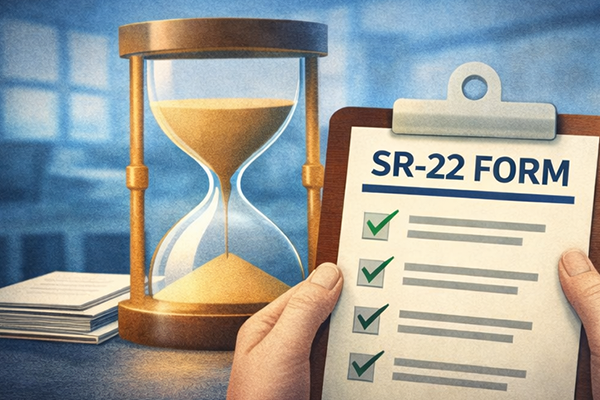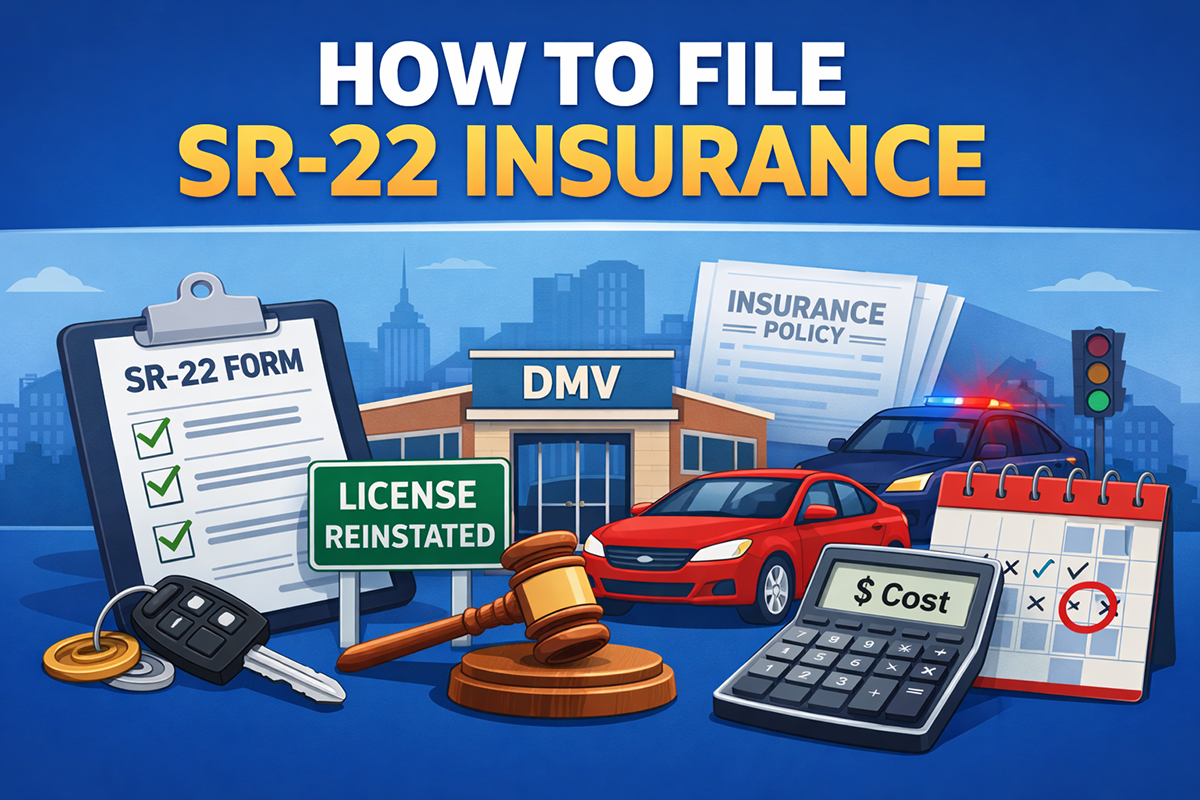
A step-by-step overview of the SR-22 insurance filing process in the United States.
SR-22 insurance is a legal requirement for millions of high-risk drivers across the United States, yet it remains one of the most misunderstood aspects of auto insurance compliance. If you have been ordered by your state’s Department of Motor Vehicles (DMV) or court to file an SR-22, understanding the filing process, maintenance rules, renewal requirements, and eventual removal is essential to restoring and protecting your driving privileges.
This in-depth guide explains how to file SR-22 insurance, who is responsible for filing it, how long the process takes, and what happens after submission. Whether your SR-22 requirement stems from a DUI conviction, driving without insurance, or repeated traffic violations, this article will walk you through every stage of SR-22 compliance in a clear and structured way.
Understanding SR-22 Insurance
Despite its name, SR-22 is not actually insurance. Instead, it is a certificate of financial responsibility filed by an insurance company with the state DMV on your behalf. The SR-22 form proves that you carry at least the minimum liability insurance required by state law.
States require SR-22 filings for drivers who are considered high-risk due to serious or repeated violations, such as:
- DUI or DWI convictions
- Driving without insurance
- License suspension or revocation
- Reckless driving
- Multiple at-fault accidents
The purpose of the SR-22 is to guarantee continuous insurance coverage over a state-mandated period, typically ranging from 1 to 5 years depending on the violation and state laws.
Who Needs to File SR-22 Insurance?
Not all drivers will ever encounter an SR-22 requirement. However, if your license has been suspended or restricted, the DMV may mandate an SR-22 filing before reinstatement.
Common situations include:
- SR-22 insurance filing after DUI convictions
- Habitual traffic offenses
- Failure to maintain auto insurance
- Court-ordered proof of insurance
Some states also require SR-22 filings for non-owner drivers who do not own a vehicle but still need proof of financial responsibility.
Who Files SR-22 Insurance for You?
One of the most common misconceptions is that drivers file SR-22 forms themselves. In reality, you cannot file an SR-22 on your own.
Who files SR-22 insurance for you?
The answer is simple: your auto insurance company.
Once you purchase or modify a policy to include SR-22 coverage, the insurer electronically files the SR-22 form directly with the DMV. This filing confirms that your policy meets state liability requirements and remains active.
If your policy lapses or is canceled, the insurer is legally required to notify the state immediately, which can result in severe penalties.
How to File SR-22 Insurance with the DMV
Understanding how to file SR-22 insurance with the DMV starts with selecting the right insurance provider. Not all insurers offer SR-22 filings, so working with a company experienced in high-risk insurance is critical.
Step 1: Confirm SR-22 Requirements
Contact your state DMV or review your court order to determine:
- The required filing period
- Whether you need an owner or non-owner SR-22
- Minimum coverage limits
Step 2: Purchase an SR-22-Compliant Policy
Choose an insurance company that offers SR-22 filings and purchase the required policy.
Step 3: Insurer Files SR-22 with the DMV
Your insurer submits the SR-22 electronically or via paper filing, depending on the state.
Step 4: License Reinstatement
Once the DMV accepts the filing, you may begin the process of reinstating your driver’s license, if applicable.
Steps to File SR-22 Insurance Online
In most states, steps to file SR-22 insurance online are streamlined and efficient due to electronic filing systems.
The typical online process includes:
- Requesting an SR-22 quote online
- Purchasing coverage digitally
- Authorizing the insurer to file SR-22 electronically
- Receiving confirmation from the DMV
Electronic filings often reach the DMV within hours, making online SR-22 filing the fastest option for most drivers.
SR-22 Filing Requirements by State
SR-22 filing requirements by state vary significantly. While the concept of financial responsibility is universal, the rules governing SR-22 duration, coverage limits, and penalties differ.
Examples include:
- California: SR-22 typically required for 3 years
- Florida & Virginia: Use FR-44 instead of SR-22 for DUI cases
- Texas: SR-22 required for multiple violations or uninsured accidents
Some states mandate higher liability limits, while others enforce strict penalties for even short coverage lapses. Always verify your state’s specific requirements.

How Long Does It Take to File SR-22 Insurance?
A frequent concern is how long does it take to file SR-22 insurance.
In most cases:
- Electronic filings: Same day or within 24 hours
- Paper filings: 3–7 business days
Delays may occur if:
- Incorrect personal information is submitted
- Outstanding fines or reinstatement fees remain unpaid
- The insurer does not specialize in SR-22 filings
Prompt filing is critical, as driving without an active SR-22 when required can extend suspension periods.

Cost to File SR-22 Insurance
Another major question is the cost to file SR-22 insurance.
The filing fee itself is relatively low, usually $15–$50 depending on the insurer and state. However, the true cost impact comes from increased insurance premiums.
Factors influencing SR-22 insurance costs include:
- Type of violation (DUI vs. non-insurance lapse)
- Driving record
- State regulations
- Policy type (owner vs. non-owner)
While SR-22 insurance is more expensive than standard coverage, shopping around can significantly reduce costs.

SR-22 Insurance Filing After DUI
SR-22 insurance filing after DUI is one of the most common and strict applications of SR-22 laws.
DUI-related SR-22 requirements often involve:
- Longer filing periods
- Higher liability limits
- Mandatory continuous coverage
Some states replace SR-22 with FR-44 forms after DUI convictions, which require even higher coverage limits. Compliance is critical, as violations can result in license re-suspension or jail time.
Maintaining SR-22 Compliance
Filing the SR-22 is only the beginning. Maintaining compliance is equally important.
Key maintenance rules include:
- Never allowing your policy to lapse
- Paying premiums on time
- Keeping coverage active for the entire required period
If your policy is canceled for any reason, the insurer files an SR-26, notifying the DMV of non-compliance.
Renewal and SR-22 Extensions
SR-22 policies must be renewed just like standard auto insurance policies. If a lapse occurs, the SR-22 period may reset, extending the requirement.
To avoid this:
- Set up automatic payments
- Renew early
- Confirm filings after renewal
What Happens After You File SR-22 Insurance?
Many drivers wonder what happens after you file SR-22 insurance.
Once accepted by the DMV:
- Your driving privileges may be reinstated
- You are legally permitted to drive (if other conditions are met)
- The state monitors your insurance status continuously
However, any violation during the SR-22 period can lead to stricter penalties and longer compliance requirements.
When Can You Remove SR-22 Insurance?
SR-22 removal is only permitted after the mandated filing period ends.
Steps include:
- Confirming eligibility with the DMV
- Requesting removal through your insurer
- Maintaining proof of standard insurance
Never cancel SR-22 coverage early without written confirmation from the DMV.
Final Thoughts: Filing SR-22 Insurance the Right Way
Understanding how to file SR-22 insurance and maintain compliance is essential for drivers navigating license reinstatement and high-risk insurance requirements. While SR-22 laws may feel restrictive, proper filing, consistent coverage, and informed decision-making can help you regain full driving privileges and move forward responsibly.
By working with experienced insurers, following state-specific rules, and avoiding coverage lapses, drivers can successfully complete their SR-22 obligations and eventually return to standard auto insurance.
About the Author