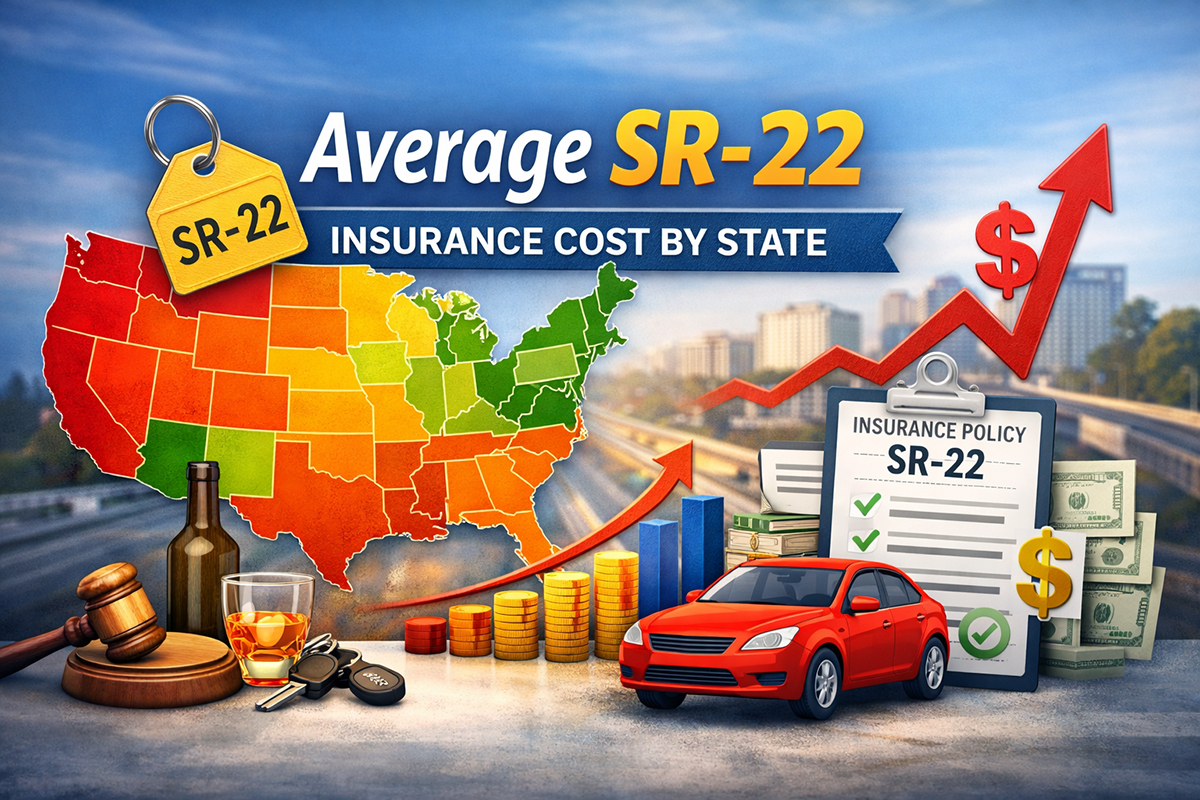
Average SR-22 insurance costs vary significantly from state to state across the U.S.
Understanding the average SR-22 insurance cost by state is essential for drivers who are required to file an SR-22 certificate after serious driving violations. Although commonly referred to as “SR-22 insurance,” an SR-22 is not an insurance policy itself—it is a state-mandated filing that proves you carry the minimum required auto liability coverage.
What makes SR-22 especially challenging for drivers is not the filing itself, but the significant increase in insurance premiums that often follows. These costs vary widely depending on the state, the underlying violation, and individual risk factors. This article provides a comprehensive, state-focused analysis of SR-22 insurance costs, explaining how pricing works, why it differs across states, and what drivers can realistically expect to pay.
What Is SR-22 and Why Does It Increase Insurance Costs?
An SR-22 is a form filed by your insurance company with the Department of Motor Vehicles (DMV) or equivalent state authority. It certifies that you meet the minimum liability insurance requirements after being classified as a high-risk driver.
Common reasons for SR-22 requirements include:
- DUI or DWI convictions
- Driving without insurance
- License suspension or revocation
- Reckless driving
- Multiple serious traffic violations
Once an SR-22 is required, insurers view the driver as high risk. As a result, premiums rise sharply—sometimes doubling or tripling compared to standard auto insurance.
This leads many drivers to ask: how much does SR-22 insurance cost in each state? The answer depends on several interconnected factors.
How SR-22 Insurance Pricing Works
1. SR-22 Filing Fee vs. Insurance Premium
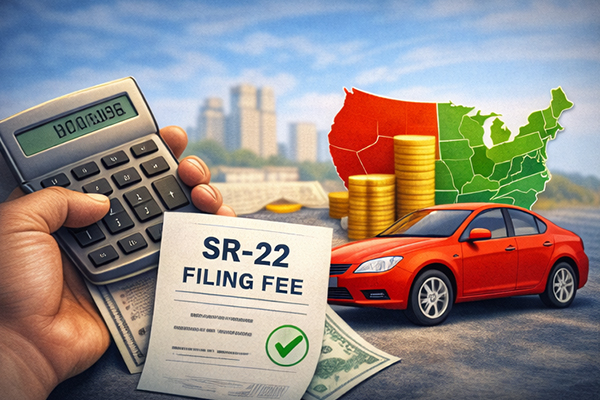
One common misunderstanding is confusing the SR-22 filing fee with the insurance cost itself.
- SR-22 filing fee: Usually $15–$50 (one-time or per filing)
- Actual cost: The increased insurance premium due to high-risk classification
The SR-22 filing fee and insurance cost by state are regulated differently. While filing fees are relatively consistent, insurance premiums vary significantly based on state laws and market conditions.
2. State Insurance Regulations
Each state sets:
- Minimum liability limits
- Rate approval rules
- Risk classification standards
States with higher minimum liability requirements typically result in higher SR-22 insurance premiums.
3. Violation Type and Driving History
Among all violations, DUI-related SR-22 filings are the most expensive. Later in this article, we’ll examine the average cost of SR-22 after DUI by state, which is substantially higher than non-DUI cases.
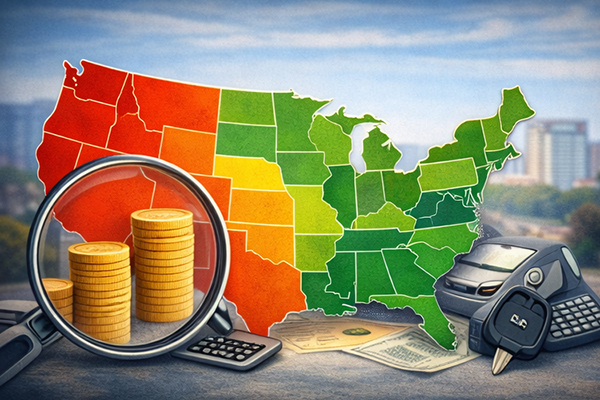
State-by-State SR-22 Insurance Rates: Realistic Cost Ranges
Below is a representative data table showing state-by-state SR-22 insurance rates based on industry averages for full-coverage policies after a major violation. Actual costs may vary by driver profile, insurer, and coverage level.
Table: Average SR-22 Insurance Cost by State (Annual Estimates)
| State | Average Annual SR-22 Cost | Relative Cost Level |
| California | $2,400 – $3,200 | Very High |
| Florida | $2,800 – $3,800 | Extremely High |
| Texas | $1,900 – $2,600 | High |
| Illinois | $1,700 – $2,300 | High |
| Georgia | $2,000 – $2,900 | High |
| Arizona | $1,600 – $2,200 | Medium |
| Ohio | $1,300 – $1,800 | Medium |
| Pennsylvania | $1,400 – $1,900 | Medium |
| North Carolina | $3,000 – $4,500 | Extremely High |
| Michigan | $3,200 – $5,000 | Extremely High |
| Indiana | $1,200 – $1,700 | Lower |
| Iowa | $1,100 – $1,500 | Lower |
| Nebraska | $1,000 – $1,400 | Lower |
| Virginia (FR-44) | $3,500 – $6,000 | Very High |
| Alabama | $1,200 – $1,600 | Lower |
Note: These figures represent average SR-22 insurance cost by state for drivers with major violations. Minimum-liability policies may cost less, while DUI cases can exceed these ranges.

SR-22 Insurance Cost Differences Between States
The SR-22 insurance cost differences between states are driven by multiple structural factors:
Minimum Liability Requirements
States such as California and Florida mandate higher liability limits than states like Iowa or Nebraska.
High-Risk Driver Pools
States with larger urban populations often have higher accident and claim rates, increasing premiums.
Insurance Market Competition
Some states have fewer insurers willing to cover SR-22 drivers, leading to higher prices.

Cheapest SR-22 Insurance by State: Where Costs Are Lower
While SR-22 is expensive everywhere, some states consistently rank as more affordable.
States often associated with the cheapest SR-22 insurance by state include:
- Iowa
- Nebraska
- Indiana
- Alabama
- South Dakota
These states typically feature:
- Lower population density
- Lower claim severity
- More insurer participation in high-risk markets
However, even in these states, SR-22 insurance remains significantly more expensive than standard auto insurance.
SR-22 Insurance Cost by State Comparison: Key Patterns
A SR-22 insurance cost by state comparison reveals several consistent trends:
- Coastal and densely populated states cost more
- States with no-fault insurance laws often have higher premiums
- States requiring FR-44 (such as Florida and Virginia) are the most expensive
Drivers relocating between states should note that moving does not eliminate SR-22 obligations. The filing must follow you until the state-mandated period ends.

Average Cost of SR-22 After DUI by State
DUI convictions dramatically increase insurance costs. Below are typical DUI-related SR-22 premium ranges:
- Low-cost states: $1,800–$2,500 annually
- Mid-cost states: $2,500–$3,500 annually
- High-cost states (CA, FL, MI, NC): $4,000–$6,000+ annually
The average cost of SR-22 after DUI by state is often 40%–70% higher than SR-22 filings for non-DUI violations.

How Long You Pay SR-22 Insurance Costs
Most states require SR-22 filings for:
- 3 years (most common)
- Up to 5 years for severe or repeat offenses
Any lapse in coverage resets the clock, making continuous insurance coverage critical.

Strategies to Lower SR-22 Insurance Costs
Even with state-mandated SR-22 requirements, drivers can reduce costs by:
- Comparing multiple high-risk insurers
- Choosing minimum required coverage (if legally allowed)
- Maintaining a clean driving record during the SR-22 period
- Improving credit score (where permitted by law)
- Switching to standard insurance immediately after SR-22 removal
Final Thoughts: Understanding SR-22 Costs by State
The average SR-22 insurance cost by state varies widely, but one fact remains consistent: SR-22 significantly increases insurance expenses due to elevated risk classification. By understanding how state regulations, violation types, and insurer pricing interact, drivers can make informed decisions and avoid unnecessary costs.
For drivers required to file SR-22, knowledge is financial protection. Comparing insurers, understanding state-specific rules, and maintaining uninterrupted coverage are the most effective ways to manage SR-22 insurance expenses over time.
About the Author