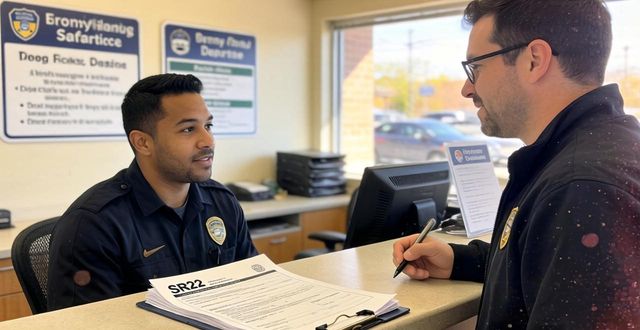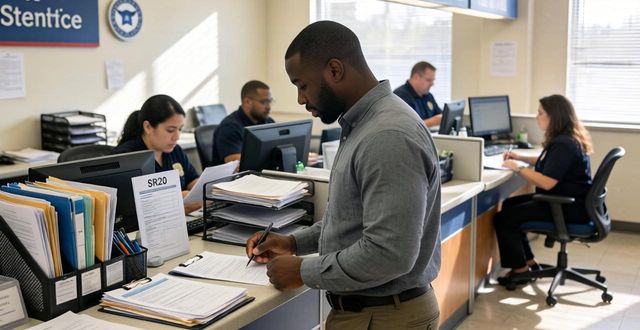
I never thought I’d have to Google “sr22 insurance in Hawaii” until that letter came in the mail.
You know the one.
White envelope. Official state seal. And that sinking feeling in your gut that something’s about to get real expensive.
So here’s the thing nobody tells you when you get your license suspended in paradise.
SR22 isn’t actually insurance
Yeah, you read that right.
An SR22 is a certificate your insurance company files with the state to prove you have coverage.
It’s proof. Not a policy.
You still need to buy actual auto insurance. Then your insurer slaps an SR22 on top and sends it to the Hawaii DMV.
That’s it.
But here’s where it gets tricky.
How long does this nightmare last?
In Hawaii, most people need to carry SR22 insurance for three years.
From the date your license gets reinstated, not from the violation date.
If you mess up badly enough or get multiple violations… yeah, they can extend it. One search result I found said repeat offenses can push it longer.
Three years feels like forever when you’re just trying to drive to work.
What it actually costs (brace yourself)
Okay, so the filing fee itself is small. Like $15 to $30 one-time payment.
That’s the bait.
The real pain is your insurance premiums skyrocketing.
One source I read said Hawaii has a 306% average premium increase when you need SR22 insurance. That’s brutal.
For comparison, North Carolina is 324% and California is 223%. So yeah, we’re near the top.
If you’re under 25? Forget about it. Even worse.
Monthly payments will hurt
I called around after my cousin told me about her experience.
She was paying around $500 per year with GEICO as a driver over 35.
But younger drivers? I saw numbers like $80 to $135 per month for full owner policies.
Some companies are cheaper than others.
Progressive quoted around $90 monthly for basic coverage.
Dairyland was around $100.
The General is another option people mention on forums.
The trick is shopping around. One person on an insurance blog said her cousin saved nearly $700 a year just by switching from a company that penalized SR22 drivers to one that specialized in high-risk policies.
That’s real money.
Non-owner SR22 is a thing
What if you don’t own a car?
Good news — Hawaii offers non-owner SR22 insurance.
It’s basically liability coverage that kicks in when you borrow or rent a car.
And it’s cheaper. Like $30 to $85 per month cheaper.
But you can’t buy this if you actually own a vehicle. That’s the catch.
What happens if you let it lapse?
Don’t.
Seriously.
If your SR22 lapses for even ONE day, your insurance company has to file an SR26 form with the state to say you canceled.
Then Hawaii suspends your license again.
Then you’re back to square one.
Starting the whole three-year clock over.
I’ve heard horror stories from people who missed a payment and ended up paying way more than they ever saved.
The 20/40/10 rule
Hawaii has specific minimum coverage limits you have to meet.
$20,000 bodily injury per person.
$40,000 bodily injury per accident.
$10,000 property damage.
Plus you need at least $10,000 in PIP (personal injury protection).
Some insurers call this “20/40/10” coverage. Make sure your policy includes it.

DUI changes everything
If you got an SR22 because of a DUI conviction… I’m sorry.
First DUI usually raises your premiums 50 to 150 percent. That’s according to several insurance guides I dug through.
Second DUI?
Your insurance rates jump 421% in Hawaii.
Yes, four hundred twenty-one percent.
That’s not a typo.
And you still have to keep the SR22 filing for three years minimum.
Some sources said DUI convictions can require SR22 for up to five years in some cases.
Getting your license back
The process is straightforward but annoying.
First, serve whatever suspension period the court gave you.
Then buy an SR22 insurance policy from a provider that offers them (not all companies do — always ask before buying).
Your insurer files the SR22 electronically with the Hawaii DMV.
Then you pay your reinstatement fees.
And retake the driving knowledge and skills tests.
Some people also need to complete an alcohol education program or DUI school.
It’s a lot of hoops.
But the alternative is driving without a license, which can get you fines from $500 to $5,000 plus more suspension time.
Not worth it.
Who actually needs SR22 in Hawaii?
The letter usually comes after one of these:
Driving without insurance (this is huge here — first offense can get you 75-100 hours of community service plus fines)
DUI conviction
Multiple traffic violations in a short period
Driving with a suspended license (ironic, right?)
Basically any time you prove to the state that you’re a “high-risk driver.”
They want proof you’re carrying insurance before letting you back on the road.
Can you drive out of state?
Yes, actually.
Your Hawaii SR22 is valid as proof of financial responsibility nationwide.
But here’s the catch — you still have to maintain Hawaii’s 20/40/10 coverage limits even when you’re driving through other states.
Some states have lower requirements. Some have higher. Hawaii’s are kind of in the middle.
Just don’t let your policy lapse while you’re on the mainland.
That’d be a mess.
What nobody talks about
The shame part.
Having to tell people you need “high-risk insurance.”
Being denied by companies you used to love.
Watching your monthly payment triple overnight.
I had a friend who got dropped by her insurer after 11 years because they didn’t “handle SR22 filings.”
Eleven years.
Gone.
She had to start over with a new company and pay triple what she used to.
So what do you actually do?
Call around.
Don’t just accept the first quote you get.
Ask for monthly payment plans — most high-risk carriers offer them.
Set calendar reminders so you never miss a due date.
And whatever you do, don’t cancel early.
Wait until the state officially says you’re done, usually after three clean years.
Then you can finally drop the SR22 and breathe again.
I’m still in my second year.
Ask me how I’m doing next summer.
About the Author