The tow truck driver didn’t say much.
Just looked at my car—the accordion front, the passenger door that wouldn’t close, the stupid airbag dust still floating around—and shook his head. “Structural,” he said. Like that one word explained everything.
Yeah. Structural damage. Frame damage. The kind where your car never drives the same again, assuming it drives at all.
I had an SR22, by the way. Filed it three years ago after a DUI. Thought I was almost done with the whole nightmare. Then this happened—a deer, then a tree, then a lot of metal noise I still hear when I can’t sleep—and suddenly my high-risk driver status had fresh fuel.
Here’s everything I learned, mostly the hard way.
what is sr22 insurance anyway
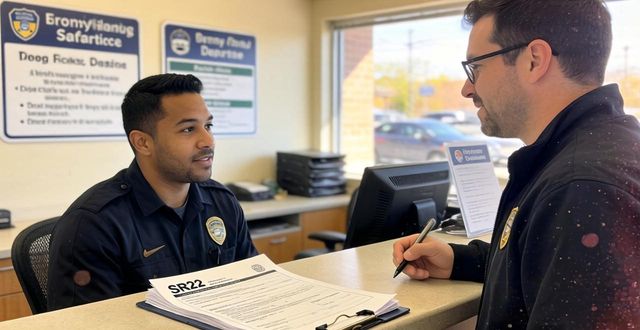
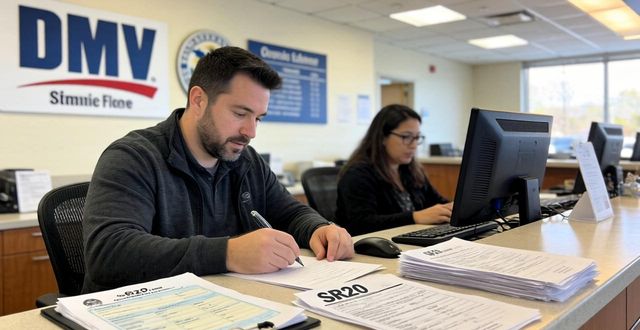
Okay so first thing first: SR22 isn’t insurance. I know everybody calls it that, but technically it’s just a certificate your insurance company files with your state DMV, proving you have the minimum liability coverage [9†L3-L8]. That’s it. A piece of paper.
The form itself doesn’t cover anything—no accidents, no damage, definitely not structural frame damage. The actual coverage comes from whatever auto policy you bought underneath that SR22 filing [17†L7-L11].
Wish someone had explained that to me before I sat in the adjuster’s office thinking the SR22 would somehow help. It doesn’t.
But here’s the kicker: if your SR22 lapses or gets canceled, your insurer has to notify the DMV immediately, and your license gets suspended again. Instantly. No warnings [10†L25-L28]. So when my car got wrecked, my first thought wasn’t even about the car. It was “oh crap, my SR22.”
structural damage car insurance claim
The adjuster came out three days after the accident.
He walked around my Civic—or what was left of it—with this clipboard and this little flashlight, shining it into every bent piece of metal. Then he said the thing I’ll never forget: “The frame rail’s pushed in about four inches. Unibody construction. That’s structural.”
Structural damage means the car’s safety cage is compromised. Even if you fix it—which most insurers won’t let you do—it’ll never absorb impact the same way in another accident [13†L7-L8].
The damage estimate came in at $11,400. The car’s actual cash value was $9,200. That’s when the real conversation started.
total loss car insurance payout
They declared it a total loss four hours later.
I looked it up afterwards. Most insurance companies use something called the Total Loss Threshold—if repair costs hit 70% to 80% of your car’s pre-accident value, they total it [14†L10-L13]. Some states are stricter than others.
For me, repairs were 124% of ACV. Obvious total loss, they called it. Not even close.
Here’s what they don’t tell you about total loss payouts: you don’t get replacement cost. You get actual cash value—what your car was worth the second before the crash, minus your deductible [5†L11-L15]. For me, that was about $7,400 after a $1,500 deductible.
Which is nothing when you still owe $5,200 on the loan.
And here’s where the SR22 nightmare really starts.
salvage title and sr22 requirement
My car had value—$7,400 from insurance, then the salvage company offered me $900 for the wreck. But the title got branded “salvage” the minute they declared total loss. That means the car’s no longer roadworthy. You can’t even drive it home, much less insure it [15†L11-L17].
Now here’s the thing about salvage titles and SR22: you can’t get the car insured with a salvage title. Period. No insurer will touch it [16†L3-L7]. And without insurance, you can’t maintain your SR22 filing. And without an active SR22? License suspended. Again.
The only way out is to rebuild the car—frame straightening, new structural parts, the whole expensive mess—then get a state inspection, then apply for a “rebuilt title” instead of salvage. Only then can you maybe find an insurer that’ll write a policy [15†L18-L24].
Even then, most will only give you liability. No comprehensive, no collision. And they’ll charge you more because rebuilt cars are “higher risk” [15†L40-L45].
I did the math on fixing mine: $11,400 in repairs for a rebuilt title that’d still be worth maybe $5,000. Make it make sense.
sr22 insurance not covering structural damage
I keep seeing people online ask “Does SR22 cover structural damage?” and the answer is no, but not for the reason you think.
SR22 doesn’t cover anything. It’s just proof you have insurance. The coverage comes from your actual policy—liability, collision, comprehensive, whatever you bought [17†L22-L27].
If you only have liability because it’s cheaper and you’re already paying high-risk premiums? Then structural damage to your own car isn’t covered at all. That’s on you.
I had collision because I still owed money on the loan. That’s the only reason I got anything. But here’s the catch: once they total your car and you accept the payout, the insurance company ends your policy. That triggers an SR26 filing—cancellation of SR22 [18†L13-L16].

Your SR22 requirement doesn’t just disappear because your car did.
sr22 insurance lapse penalty
The day after they cut the check, my insurance agent called. “We’ve closed your policy since the car’s a total loss. Your SR22 filing will terminate in three business days unless you provide proof of insurance on another vehicle.”
I didn’t have another vehicle.
“Then your license will be suspended,” she said. Like she was telling me the weather.
Here’s what that means: if your SR22 lapses for any reason—even because your car got destroyed—your insurer notifies the DMV. The DMV suspends your license. Your SR22 requirement clock might reset. And you’ll pay reinstatement fees. In Texas it’s around $100 just for the reinstatement, plus whatever your state charges [20†L20-L22].
I ended up buying non-owner SR22 insurance—liability coverage that follows me, not a specific car. It’s cheaper than owner coverage, around $40-$60 a month depending on your state and record [20†L27-L35]. And it kept my filing active while I figured out what to do next.
But the clock reset. Three more years of SR22 instead of the six months I had left.
sr22 insurance after total loss
So you wreck your car with an SR22. What do you actually do?
First: don’t cancel your policy. Even if the car’s gone. Call your agent and ask about switching to a non-owner SR22 policy before they file that SR26 termination [9†L24-L27].
Second: accept that your rates are going up. I got quotes afterward—liability only on a rebuilt beater I was looking at—and the cheapest was $178 a month. For liability. On a car worth $3,000. Because now I had a total loss on my record plus the DUI from before [8†L36-L41].
Third: document everything. Police report, photos of the damage, the tow receipt, every email from the adjuster. You’ll need it if you dispute the total loss valuation, and you’ll definitely need it when shopping for new coverage [13†L11-L12].
cost to rebuild structural damage
I asked a body shop what it would actually take to fix my car.
Frame straightening: $3,800. New radiator support: $900. Replacement unibody rails (they don’t even make them anymore for a 2014 Civic, so used parts only): $1,200 each. Plus paint, plus labor, plus the inspection fee after.
Total: $13,600 for a car the insurance company said was worth $9,200 before the crash.
Structural damage isn’t like a broken taillight. Once the frame’s bent, you’re talking about the car’s entire crash structure. Some insurers won’t even insure a rebuilt car that’s had frame damage because they can’t be sure it’ll protect you in another accident [16†L20-L23].
I ended up selling the wreck for $900 and walking away. Which means I had no car, no payout after the loan was paid, and still three years of SR22 payments.
So yeah. That’s where I am.
sr22 filing after total loss claim
The system doesn’t pause just because life happened.
You’d think getting in an accident, losing your car, dealing with structural damage and a total loss settlement—someone at the DMV would go “okay, that’s enough.” They don’t. The SR22 stays on your record for whatever period the court or state ordered. Usually three to five years [19†L41-L44].
And every time your policy changes—new car, no car, salvage title, rebuilt title—you have to make sure your SR22 stays active. If there’s even a one-day gap, file an SR26, and you’re back to square one [10†L25-L28].
I’m riding a bike to work now. Not gonna lie. The bus doesn’t run early enough for my shift.
Non-owner SR22 keeps me legal to drive a friend’s car if I need to, but mostly I just walk. It’s embarrassing. But less embarrassing than explaining to a judge why my SR22 lapsed because my car got crushed by a tree.
final thoughts
If you’ve got an SR22, have a plan for what happens if your car gets totaled.
Know your policy’s actual cash value vs. your loan balance. Know whether you have collision coverage or just liability. And figure out how you’ll switch to non-owner SR22 before your old policy gets canceled and the DMV finds out.
Structural damage doesn’t care about your driving record. The frame bends the same way whether you have a DUI or a perfect record. But the aftermath—the paperwork, the lapses, the resets, the higher rates—that’s where being a high-risk driver really hurts.
I’m three months in now. Still on the bike. Still paying the SR22. Still waiting for the day I can finally drive without looking over my shoulder.
If you need SR22 insurance after a total loss, call your insurer before they cancel you. And maybe don’t hit the tree. That part helps too.
About the Author