My heart literally stopped when I saw the letter.
“NOTICE OF SUSPENSION.”
No way. I’d been so careful.
But I’d missed a payment. Just one. A stupid automatic billing thing where my card expired and I forgot to update it.
Two days. That’s all the gap was. Two days without coverage.
And just like that, the state yanked my license again.
Here’s the thing nobody warns you about when you get stuck with an SR-22 requirement.
I thought once the certificate was filed and my license was back, I could relax a little. Just pay my bills, keep my head down, three years would fly by.
Nope. I was so wrong.
What actually happens when an SR-22 lapses?
Let me break this down because I learned it the expensive way.
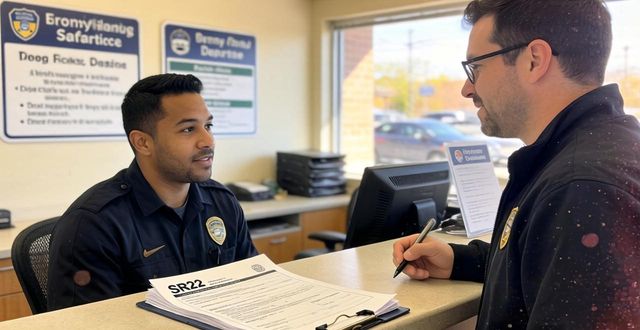
An SR-22 isn’t insurance. It’s a form your insurer files with the DMV to prove you carry the state’s minimum liability coverage.
Sounds simple, right? But here’s the kicker.
When your policy lapses — even for one day — your insurance company is legally required to notify your state’s DMV immediately. Like, the same day.
There’s no grace period. No “hey, you forgot to pay, we’ll give you a week.” Nothing.
The moment the DMV gets that notification? Boom. Your license is suspended again.
Does resetting the SR-22 period restart the entire three years?
This part hurt the most to find out.
In most states — and definitely in California where I am — you have to carry an SR-22 for three continuous years.
But if your coverage lapses? The clock doesn’t just pause. It often resets back to zero.
I’d already made it 18 months. Eighteen! That’s halfway there.
Then my lapse happened. The DMV basically said “sorry, start over.” Another three years. From scratch.
Some people call this the “SR-22 reset rule”. It’s brutal.
Can you drive at all with a lapsed SR-22?
No. Absolutely not.
If your SR-22 lapses, your driving privileges get suspended again. That means you can’t legally drive anywhere.
Not to work. Not to the grocery store. Not to pick up your kids from school.
And if you get caught driving with a suspended license? That’s a whole new nightmare. More fines. Potential jail time. Your SR-22 requirement might even get extended even further.
I saw someone in an online forum say their friend got pulled over for a broken taillight while their SR-22 had lapsed four days earlier. The cop impounded their car on the spot.
Don’t risk it.
What does SR-22 filing cost after a lapse?
Okay, let’s talk money. Because this is what really stings.
First, you have to pay a license reinstatement fee to the DMV. In my state, that was $55.
Then you need to get a new SR-22 policy. That means paying another SR-22 filing fee, usually between $15 and $50.
But here’s the killer.
Your insurance rates will probably go up. The lapse goes on your record, and insurers see that as you being even riskier than before.
I called around for quotes after my lapse. Every company was at least 30% more expensive than before. One wanted me to pay six months upfront — over a thousand dollars.
It felt like being punished twice.
“What if my SR-22 lapses before the three years are up?”
That’s literally the question I typed into Google at 2 AM, panic-sweating.
The answer is simple and devastating.
Your license gets suspended again. You have to file a new SR-22. And you start your three years over from the beginning.
But here’s a scenario most people don’t think about.

What if you’re required to have an SR-22 because of a DUI, but you don’t currently own a car?
You still need an SR-22 policy — a non-owner SR-22. It’s cheaper than regular insurance but still must stay active. If it lapses? Same consequences. License suspended. Clock resets.
How do you reinstate your license after an SR-22 lapse?
If this just happened to you, I’m sorry. I know how stressful this is.
Here’s what you need to do immediately.
Step one: Get a new insurance policy with an SR-22 filing. Call around. Some insurers specialize in high-risk drivers. Not every company offers SR-22s, so ask specifically.
Step two: Have your insurer file the SR-22 electronically with the DMV. This has to happen before you can do anything else.
Step three: Contact the DMV and ask what reinstatement fees you owe and how to pay them. Some states let you pay online. Others want a money order. Yes, it’s annoyingly old-school sometimes.
Step four: Once the DMV confirms the SR-22 is filed and your fees are paid, they’ll reinstate your license.
The whole process took me about a week. Could’ve been faster if I’d acted immediately instead of crying about it first.
But here’s the really frustrating part.
Even after you fix everything, your SR-22 clock restarts at day one.
That’s the rule that makes this so painful. You can’t just “catch up” those lost months. They’re gone forever.
Is there any grace period for SR-22 lapse?
I keep seeing people ask this in forums. “What if I fix it in three days? What if it was just an honest mistake?”
Here’s the cold,hard truth.
Most states have zero grace period for SR-22 lapses. Zero. Not one day, not one hour.
California, Texas, Florida, New York — all no grace period.
I’ve heard some states like Ohio or Washington might be slightly more flexible for very short lapses, but don’t count on it.
And here’s what I learned from my mistake.
The state doesn’t care if your lapse was an accident. A missed payment, an expired card, switching jobs and forgetting to update your billing info — none of it matters.
The insurance carrier reports the cancellation automatically. The DMV acts on that report immediately. There’s no human looking at your case going “oh poor guy, let’s give him a break.”
How to keep your SR-22 from lapsing (learn from my mistake)
I don’t want you to go through what I went through. So here’s what I do now.
Set up auto-pay. I know, I know — my card expired and that’s what caused my lapse. So now I set calendar reminders for every credit card expiration date. I update my payment info before it even becomes a problem.
Keep a buffer in your checking account. Enough to cover the auto-payment if it drafts at a weird time.
If you switch insurance companies, do not cancel your old policy until the new one’s SR-22 is filed and confirmed by the DMV. This is huge. A gap of even one day triggers a lapse.
Check your policy renewal date. Mark it on your phone with a reminder three weeks ahead.
And honestly? Call your insurance agent once a month just to confirm everything’s active. It takes five minutes and could save you years of headache.
“What if I move to a different state while on SR-22?”
I looked into this when I thought about moving to escape my problems (spoiler: you can’t run from the DMV).
You need to file a new SR-22 in your new state before canceling the one in your old state.
Some states have different requirements. Illinois might want higher liability limits than Missouri. Washington’s rules are different from Oregon’s.
And your required SR-22 period might change. Three years in one state could be two or five in another.
Bottom line: Don’t move without talking to an insurance agent first.
A final word from someone who learned the hard way
I’m not writing this to scare you. I’m writing this because I wish someone had told me all of this before I made my mistake.
That SR-22 requirement is a leash. You can’t slip it, not even for a day.
One missed payment. One expired card. One lazy afternoon where you meant to call your agent but forgot. Any of these things can set you back years and cost you thousands.
When your SR-22 period finally ends — and it will end — call the DMV and get that confirmation in writing.
But until then? Keep that policy active like your license depends on it.
Because it literally does.
About the Author