I never thought I’d be writing about SR22 insurance.
Honestly.
But here I am, three months after my husband passed.
I’m a widowed driver. I never had a DUI. Never got into a wreck. But I inherited an SR22 requirement from his DUI conviction because our auto policy was in his name.
And now? My license is at risk.
What even is SR22 insurance?
So many widowed drivers get blindsided by this.
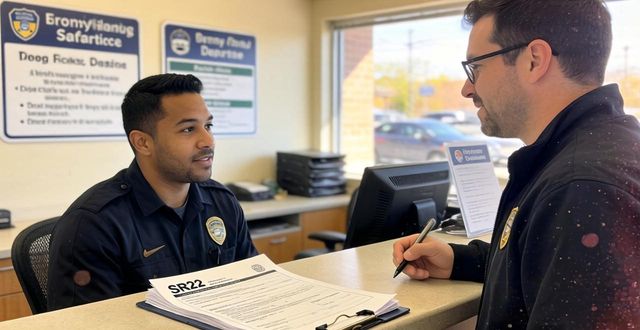
An SR22 isn’t actually insurance. It’s a certificate your insurance company files with the state DMV to prove you meet their minimum liability coverage requirements [0®L5-L7].
Most people think it’s a special type of policy. It’s not.
Think of it as a monitoring program. The state wants to know you’re insured. For a specific period. Usually around three years [4®L35-L37].
And here’s the painful part for widowed drivers — you inherit it when your spouse dies and leaves behind an active SR22 requirement. Even if you have a perfect driving record. Yep.
Can you get SR22 insurance after spouse dies?
Yes. But the process stings.
First week after he passed, I called our insurer.
They asked for a copy of his death certificate. Also our marriage certificate. Also the car titles. It’s standard, they said. But everything felt mechanical and cold [8®L42-L45].
Here’s the real brutal truth some states still allow reclassification from “married” to “widowed” status. Which then triggers higher rates [5®L29-L32].
Widow penalty in car insurance
Texas actually passed a law in September 2025 banning insurers from raising premiums solely because a surviving spouse is removed from a police. But many states still let this happen [5®L5-L9].
One Dubliner’s car insurance went up by over €200 just for removing her late husband from the policy. Her quote literally said — “Being widowed makes me a higher risk than being married to a dead person” [5®L39-L44].
That’s the insanity widows face.
Some insurers impose 20% premium hikes after reclassifying surviving spouses as “single” [5®L14-L16].
The logic? Actuarial data suggests single drivers file more claims. It’s cold. It’s algorithmic. It’s not fair. But that’s the game.
Cost for SR22 insurance 2026
Okay, so numbers.
In 2026, typical SR22 drivers pay between $1,800 and $5,600 per year for liability-only coverage. The national average lands around $3,000 annually [1®L5-L9].
But non-owner SR22 policies (if you don’t own the car you’re driving) range from $111 to $1,100 per year [1®L11-L14].
The SR22 filing fee itself is tiny — just $15 to $50 one time [9®L7-L9]. But the premium hikes? That’s what kills your wallet.
Premium increases of 50% or more are normal. The average annual cost reaches $3,295 for drivers with a DUI [9®L17-L21].
That’s with a clean driving record as the surviving spouse.
They base it on the high-risk driver still affecting the policy.
How to transfer SR22 after spouse passes
Here’s the step-by-step that worked for me.
Step 1 — Get multiple copies of the death certificate. You’ll need them. Every single insurer and DMV wants one.

Step 2 — Call your current insurance company immediately. Don’t wait. Ask to be listed as the new “named insured” on the police. Provide documentation [3®L16-L20].
Step 3 — Find out if the existing police can continue or if you need a new policy entirely. Often you can simply add an SR22 to your existing police instead of starting from scratch [8®L49-L51].
Step 4 — Contact your state DMV directly. Make sure they’ve received and processed the new SR22 filing. Do not assume everything was done correctly [4®L30-L33].
Step 5 — Switch providers if your current insurer penalizes you for being widowed. Shop around. GEICO offers SR22 coverage for around $512 per year. Dairyland specializes in high-risk drivers at roughly $68 per month [11®L11-L14] [11®L25-L30].
Keep that coverage continuous
The worst mistake? Letting the SR22 lapse.
If you cancel your policy before the required period ends, your insurance company notifies the state. Your license gets suspended. The SR22 timer resets. You have to start all over [14®L30-L34].
Most states require you to maintain this for three years without any further incidents [14®L14-L16].
I check my policy every single month now. The anxiety never really fades.
Non-owner SR22 insurance option
Here’s something many widowed drivers don’t know.
If you sold your spouse’s car after their death and don’t currently own a vehicle — you can still file an SR22 through a non-owner policy [3®L10-L14].
Non-owner SR22 is much cheaper. Typically $400 to $1,200 per year, since it only provides liability coverage. No comprehensive or collision needed because you aren’t insuring a specific car [7®L9-L13].
This saved me about $900 this year.
Tips to lower SR22 costs as a widowed driver
Bundle your policies. Homeowners or renters insurance with the same carrier can unlock discounts.
Ask about safe driver discounts. My record is spotless. Why should I pay the same as someone with multiple DUIs?
Increase your deductible if you can afford it. Lower monthly premiums, higher out-of-pocket if something happens. It’s a gamble.
Look into state assistance programs. South Carolina doesn’t have a dedicated low-income car insurance program, but some states offer emergency cash aid that can be applied to auto insurance premiums [13®L28-L31].
Check if your employer offers legal benefits or hardship assistance. Mine didn’t. But some do.
After the SR22 period ends
You can request removal once the court or DMV-mandated period is up.
Your insurer files an SR26 form with the state. That’s the cancellation certificate. No more monitoring.
Your premiums might still remain elevated for a while because the violation stays on your spouse’s driving record for longer. But at least the SR22 filing requirement itself goes away.
I’ve marked my calendar. Three years from the date of his passing. Counting down. Can’t wait to be done.
Navigating SR22 insurance as a widowed driver is one of those cruel surprises grief throws at you when you least expect it.
You’re already hurting. And then bureaucracy piles on.
But understanding the rules? Knowing your rights if your state prohibits “widow penalties”? Shopping around aggressively?
That’s how you survive this.
Check your state’s DMV website. Call multiple insurers for quotes. Keep copies of everything.
You’ll get through it. One day at a time.
Just like everything else.
About the Author