I’m not a mechanic. Or an insurance expert, really.
But last winter, my old sedan started leaking coolant like a sieve.
Didn’t notice at first. Just saw some weird greenish puddle under the car one morning. Thought, eh, I’ll deal with it later.
That was stupid.
Because three days later, the engine overheated while I was merging onto the highway. Smoke everywhere. Car died right in the middle of the ramp.
Cop showed up. Towed my car. Wrote me up for “unsafe vehicle operation” or something like that.
Then came the real nightmare. My insurance agent called and said, “By the way, you need SR-22 insurance now.”
Wait, what? For a freaking coolant leak?
What is SR-22 insurance exactly?
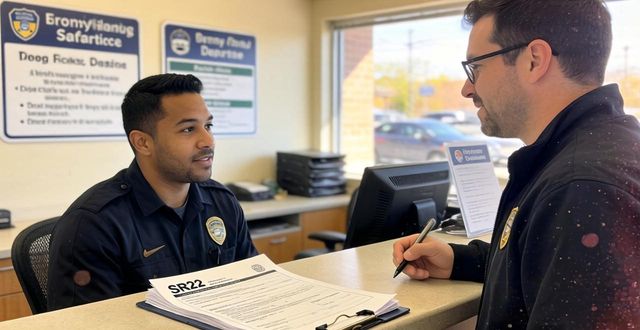
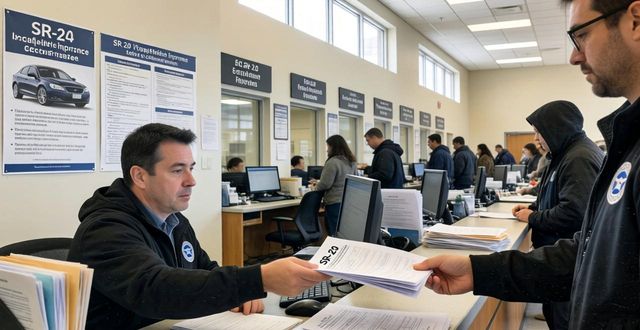
Turns out SR-22 isn’t actually insurance. It’s a form. Your insurance company files it with the state to prove you have liability coverage [7†L2-L5]. That’s it. Just paperwork.
But here’s the kicker — getting that form is expensive. And humiliating.
My premium shot up by like $200 a month. For three years.
So yeah, that coolant leak cost me way more than a tow truck and a radiator flush.
Does coolant damage lead to SR-22?
Here’s where it gets tricky.
A simple coolant leak won’t trigger SR-22 on its own. But if that leak causes a crash — especially one where someone gets hurt or property damage exceeds $1,000 — the state might require SR-22 [0†L39-L43].
In my case, my engine died on the highway. A pickup truck rear-ended me because I was dead stopped. He wasn’t hurt, thank God, but his front end was wrecked. My liability insurance paid for his repairs. But since I was technically driving an unsafe vehicle, the state slapped me with a violation.
That violation = SR-22 requirement for three years [3†L12-L13].
Does standard insurance cover coolant damage?
Here’s something I wish I’d known before.
Most standard car insurance policies do NOT cover coolant or other “consumables” — engine oil, brake fluid, coolant — even if the damage happens during an accident [2†L21-L24].
Yeah, I learned that when my adjuster said,“We’ll cover the collision damage but not the coolant itself.”
You can buy an add-on “consumables cover” that handles these items. But I didn’t have it. Most people don’t [2†L26-L29].
How SR-22 changed my life — for real
After that accident, every month felt like walking on eggshells.
One late payment? The state gets notified immediately. Your license gets suspended again. And the SR-22 clock resets [7†L13-L15].
I set calendar reminders. Auto-pay. Double-checked every statement.
My friends thought I was being dramatic. But when you’re a high-risk driver, insurance companies don’t mess around. They scrutinize everything at renewal [8†L24-L27]. If you file another claim — even a small one — they can drop you.
So I drove like a grandma. Checked my coolant every single morning. Kept a jug of antifreeze in the trunk.
Paranoid? Maybe. But paranoid kept me compliant.

What about coolant damage and your premium?
Even if you don’t cause an accident, a coolant-related claim can still increase your rates.
Insurance companies look at everything — not just accidents but mechanical breakdowns that lead to claims [8†L46-L50].
My mechanic said it best: “Coolant leaks don’t fix themselves. Ignoring it is like ignoring a toothache. Eventually, you’ll pay ten times more.”
He wasn’t wrong.
Can you avoid SR-22 after a coolant mishap?
Here’s what I’d tell my past self:
First, fix the coolant leak AS SOON as you see it. Don’t wait. A $300 radiator repair beats a $3,000 insurance premium hike.
Second, if you do get into an accident, document everything. Photos of the coolant puddle. Mechanic’s report. Witness statements. The cop who wrote the ticket — get his name.
Third, call your insurance company BEFORE the state does. Sometimes they can negotiate with the DMV on your behalf.
But if the state orders SR-22, you have no choice. You just have to carry it for the required period — usually three years — and pray nothing else happens [6†L18-L22].
The real cost of SR-22 (not just money)
The filing fee itself is small — maybe $15 to $50 once [4†L19-L21].
But the premium increase? That’s brutal.
I went from paying $110/month to $310/month. For liability only. Didn’t even have collision coverage anymore because I couldn’t afford it.
Three years of that adds up fast. Over $7,000 extra.
And that doesn’t count the stress. The late-night what-ifs. The fear of driving anywhere farther than the grocery store.
So here’s my honest advice
Don’t ignore weird smells or puddles under your car. Get them checked.
Learn the difference between liability and comprehensive coverage. Liability pays for damage you cause to others. Comprehensive covers your own car from things like theft, fire, or — yes — coolant-related engine failure. But even then, consumables like coolant itself might not be covered [2†L31-L34].
If you already have SR-22 (for a DUI or something), be extra careful. One more at-fault accident can extend your filing period to five years or longer [3†L42-L44].
And if you don’t own a car but need SR-22? Look into non-owner SR-22 insurance [11†L2-L6]. It’s cheaper and covers you when you borrow or rent a car.
Final thought (from someone who’s been there)
That stupid coolant leak changed my life in ways I never expected.
Not just financially — although that hurt plenty.
But it made me realize how quickly things can spiral. One small maintenance issue, one bad decision to ignore it, and suddenly you’re labeled a “high-risk driver” for three years.
Check your fluids. Really.
And if you do end up needing SR-22 insurance after a coolant accident, just know — you’re not alone. Thousands of people mess up like this every year. The system is designed to punish, yeah. But it’s also designed to let you back on the road eventually.
Keep paying. Keep driving carefully. And for the love of God, keep an eye on that temperature gauge.
About the Author