Okay, let’s just get this out of the way.
When I got that letter from the DMV, my heart sank. It said “SR-22 required.” I only drive like twice a week. Maybe to the grocery store on Tuesdays, and to pick up my kid from practice on Fridays.
I thought, “There’s no way this applies to me.”
It’s not actually insurance (I know, the name is confusing)
Here’s the first thing nobody tells you.
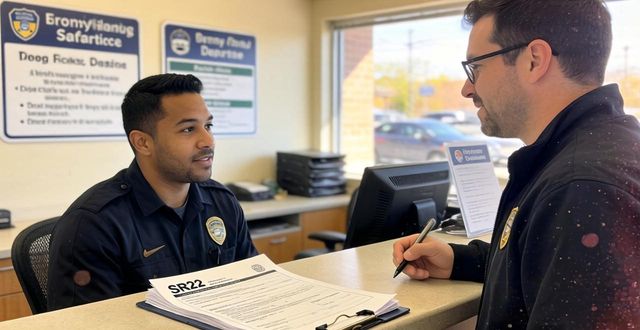
An SR-22 isn’t a type of insurance policy. It’s literally just a form your insurance company files with the state. Think of it as a digital sticky note that says “hey, this person has coverage now.” [6†L3-L5]
That’s it.
But it’s required after things like a DUI, driving without insurance, or too many tickets piling up. [6†L10-L12]
And here’s the kicker. If you’re a part-time driver like me? You’re not off the hook just because you don’t drive much.
The state doesn’t care how often you drive
I learned this the hard way.
Whether you drive every single day or just borrow your roommate’s car on weekends, the same rules apply. The DMV doesn’t give you a “part-time discount” on the requirement. [10†L34-L36]
But here’s what I wish someone had told me before I spent five hours panicking on my couch.
How much does this actually cost? (Spoiler: it’s not the filing fee)
Okay, deep breath.
The actual SR-22 filing fee? It’s like $15 to $50. One time. That’s not the problem. [9†L3-L4]
The problem is what happens to your insurance premium.
In 2026, drivers with an SR-22 are paying somewhere between $1,800 and $5,600 per year. The average is around $3,000 annually after something like a DUI. [9†L4-L6]
Yeah. I know. That number hurts.
But wait. Don’t stop reading.
Non-owner SR-22 – the thing nobody told me about
If you don’t own a car but still need to file an SR-22, listen up.
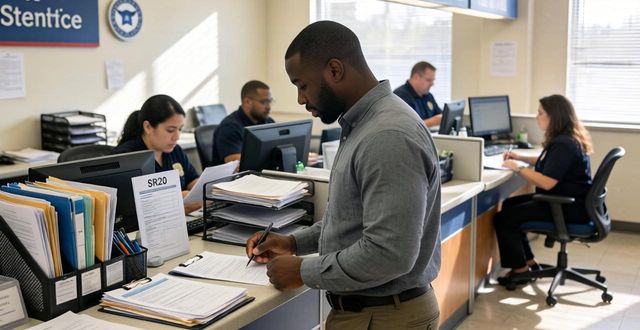
A non-owner SR-22 policy exists. It’s liability insurance that attaches to YOU as a driver, not to a specific vehicle. [10†L18-L22]
It’s designed for exactly people like us. People who borrow cars. People who rent occasionally. People who just need to get their license back without buying a car they can’t afford. [10†L28-L31]

And the cost? For 90% of high-risk drivers who don’t own a vehicle, the non-owner SR-22 is the cheapest option by far. We’re talking $600 to $1,800 per year instead of thousands. [9†L13-L14]
That’s still not cheap. But it’s a lot better than the alternative.
How to keep the cost down (because we all need to eat)
Let me share what actually worked for me.
First, shop around. I know it’s annoying. But rates for high-risk drivers vary like crazy between companies. Like,hundreds of dollars different. [13†L4-L7]
Second, check out GEICO. They’re consistently one of the cheapest for SR-22 drivers, with average annual rates around $512 according to some 2026 comparisons. [8†L27-L29]
Progressive is another solid option. Their average premium increase for an SR-22 driver is only about 3%. [12†L25-L27]
Third, if you really don’t drive much, ask about a non-owner policy specifically. Some agents won’t mention it unless you ask. Don’t be shy.
The thing that can ruin everything (don’t let this happen to you)
Here’s what keeps me up at night.
If your insurance lapses while you have an SR-22 filing, your insurer has to notify the DMV. Immediately. [9†L45-L48]
And then? Your license gets suspended again. And your SR-22 clock resets. So you have to start the whole three-year period over from scratch. [10†L44-L47]
One missed payment. That’s all it takes.
So set up autopay. Seriously. Just do it.
A quick word about how long this lasts
Most states require you to keep an SR-22 filing for about three years. Some states it’s one year. Some states it’s five. Check your specific state requirements. [1†L11-L13]
But the clock only counts if you keep continuous coverage the whole time.
No gaps. No lapses. No switching companies without making sure the new policy is active first.
The bottom line (because you probably stopped reading by now)
If you’re a part-time driver who needs an SR-22, you have options. You’re not trapped.
The filing fee is small. The premium increase is real but manageable. And if you don’t own a car, a non-owner policy is probably your best bet.
I got mine sorted. Took about two days of calling around. Cost me less than I expected. Not fun, but not the end of the world.
You’ll get through this too. Just don’t ignore the letter.
About the Author