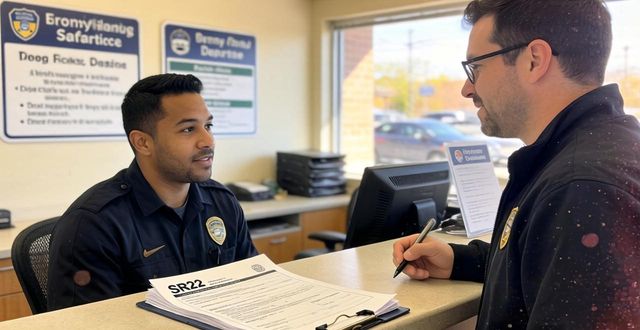
I remember staring at my first SR22 quote thinking they’d made a typo. $3,200? For a form?
Turns out,I wasn’t alone.
Here’s what nobody tells you: the SR22 itself costs like $25. The real hit comes from that high-risk label they slap on your record [10†L3-L5].
But after two years of digging myself out of this hole, I found ways to cut my premiums almost in half.
Let me share what actually worked.
1. Shop Around – Like, Really Shop
I almost stayed with my old insurer out of laziness. Big mistake.
Different companies quoted me wildly different prices – we’re talking hundreds of dollars apart [8†L18-L21].
One wanted $400 a month. Another offered $210 for the same coverage.
What I learned: Don’t just check the big names like Geico or Progressive. Look at specialists like Dairyland and The General. They actually want high-risk drivers [13†L21-L22].
Pro tip: Get at least 3-5 quotes in the same week. Prices change fast.
2. Don’t Own a Car? Get Non-Owner SR22
This one saved me a ton.
If you don’t have a vehicle but need to reinstate your license, a non-owner policy costs way less – like $600 to $1,800 a year versus regular policies [10†L13-L14].
Some people pay as little as $35-60 a month for non-owner filing [13†L15].
You still meet the legal requirement. You just don’t pay for coverage on a car you don’t drive.
3. Raise Your Deductible (If You Can)
This feels counterintuitive when money’s tight, but hear me out.
Bumping my deductible from $500 to $1,000 dropped my premium by about 15% [15†L9].
The catch? You need that $1,000 in savings just in case. I put it in a separate account and pretended it didn’t exist.
Not for everyone. But if you can swing it, the monthly savings add up fast.
4. Bundle Everything You’ve Got
I added renters insurance to my auto policy – cost me $12 a month but saved me $28 on my car insurance [15†L7-L8].
Net savings: $16 a month, plus I got renters coverage I didn’t have before.
Same goes for homeowners, life insurance, whatever. Insurers love when you give them more business.
5. Take a Defensive Driving Course
Sounds annoying, I know. But my online course took like 6 hours and cost $25.
It knocked 8% off my premium [15†L7].
Most states approve these courses. Just check with your insurer first – some have specific ones they accept.
Plus, I actually learned a few things about avoiding accidents. Worth it.
6. Pay Upfront If Possible
Monthly payments come with service fees. They don’t tell you that outright.
When I switched to paying my full 6-month premium at once, I saved about $8 a month in fees [15†L9-L10].
That’s $96 a year just for paying differently.
I know not everyone can drop $800 at once. But if you can scrape it together, it’s free money.
7. Keep Your Record Spotless
Obvious, right? But here’s what I didn’t realize…

After 12-18 months without any new violations, my insurer actually reduced my rate. Like, proactively lowered it [15†L5-L6].
No tickets. No accidents. Not even a parking violation if I could help it.
Every clean month chips away at that high-risk label. It’s not permanent.
8. Ask About Every Discount
I felt weird asking. Like, “I’m high-risk, why would I get discounts?”
But insurers have all sorts of random discounts:
Good student (if you have a teen driver)
Low mileage (I drove way less during my SR22 period)
Safety features on your car
Paid-in-full discount
Paperless billing (seriously, $5 a month just for emails)
Just ask. The worst they say is no.
9. Don’t Let It Lapse – Seriously
This almost got me.
I switched jobs and almost missed a payment. One day late would have reset my entire 3-year filing period [10†L10-L12].
The insurer has to tell the DMV immediately if you cancel or miss a payment. Then your license gets suspended again. Then you start over.
Set up autopay. Mark it on your calendar. Do whatever it takes.
A lapse doesn’t just cost you fees – it costs you time. Years of it.
10. Check Rates Every 6 Months
Here’s the trick most people miss.
Your violation ages like… well, like a bad smell that slowly fades.
After 6 months, a year, 18 months – new insurers see you differently. Their algorithms update.
I checked quotes at every renewal. Found a better rate with a different company after 8 months and switched.
Just make sure the new insurer files your SR22 before you cancel the old one. No gaps allowed [8†L44-L46].
How Long Will You Need This?
Depends on your state and offense. Usually 1 to 5 years [18†L14-L16].
California often requires 3 years. Texas sometimes 2 years [16†L43-L45].
Check with your DMV. Mark that end date on a calendar. Count down the months.
When you’re close, call and confirm you’ve met all requirements. Then you can finally cancel that filing.
The Hard Truth
Your rates will be higher for a while. I won’t lie about that.
First-time DUI offenders can see increases of $2,000 to $4,000 per year [7†L11-L12].
But I cut my premium from $3,400 to about $1,900 in 14 months just by doing the things above.
The high-risk label fades. Insurance companies have short memories if you give them reasons to forget.
Keep driving clean. Keep paying on time. Keep shopping around.
You’ll get through this. I did.
About the Author