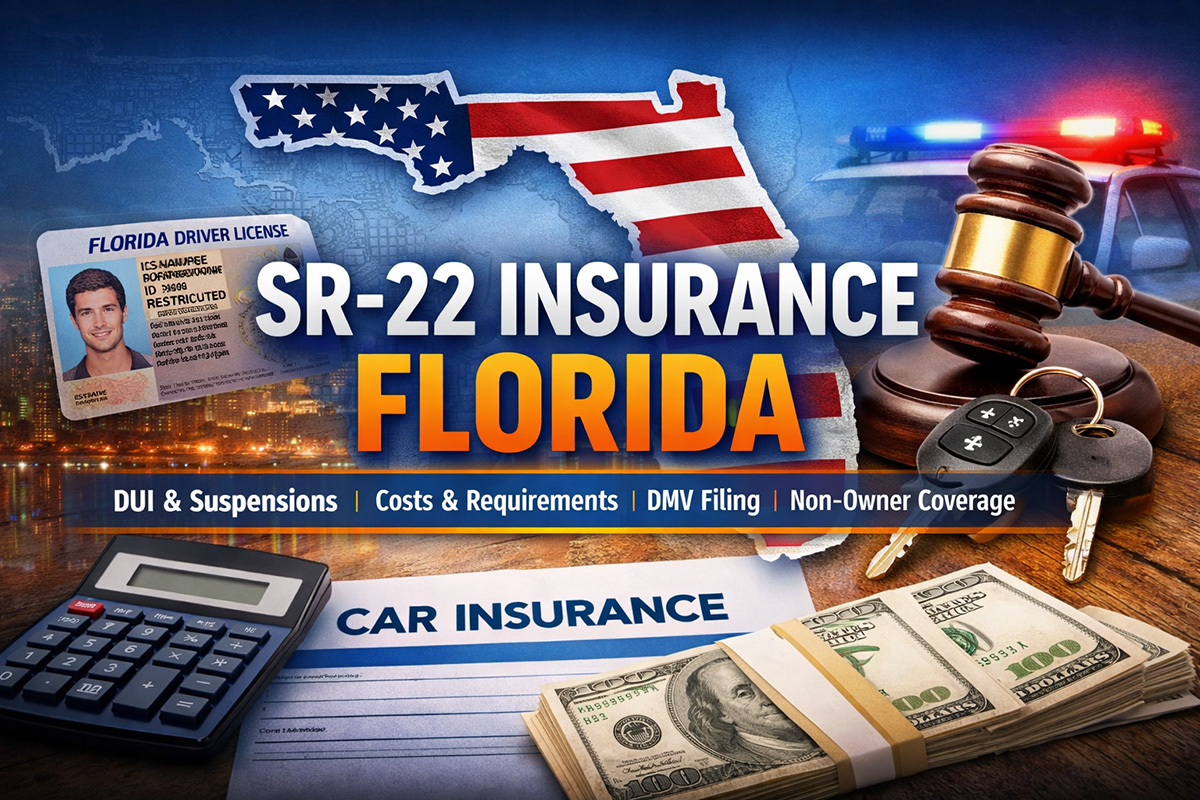
Overview of SR-22 insurance rules, costs, and filing process in Florida
Introduction: Understanding SR-22 Insurance in Florida
SR-22 is not an insurance policy by itself—it is a state-mandated certificate of financial responsibility that proves a driver carries at least the minimum required auto liability coverage. In Florida, SR-22 filings are commonly required for drivers classified as high-risk due to serious traffic violations.
This article is part of the States section, where SR-22 requirements are organized by state. It provides a comprehensive, professional, and SEO-optimized overview of SR-22 Insurance Florida, including state regulations, cost ranges, filing procedures, and real data insights tailored to U.S. drivers.
The core keyword of this article is SR-22, and throughout the guide you will also find detailed explanations addressing:
- SR-22 insurance Florida requirements
- How to get SR-22 insurance in Florida
- Florida SR-22 insurance cost
- Cheapest SR-22 insurance in Florida
- SR-22 filing Florida DMV
- Florida SR-22 insurance after DUI
- How long do you need SR-22 insurance in Florida
- Non-owner SR-22 insurance Florida
1. What Is SR-22 and Why Florida Requires It
An SR-22 is a form filed by an insurance company with the state to certify that a driver meets Florida’s minimum liability insurance requirements. Florida law uses the SR-22 as a risk-control mechanism—it allows the state to monitor drivers who have demonstrated a higher likelihood of financial or legal risk on the road.
Unlike many states, Florida does not require SR-22 filings for all high-risk violations. However, when mandated, compliance is strict and long-term.
Common Reasons Florida Requires SR-22
Drivers may be required to carry SR-22 Insurance Florida after:
- Driving under the influence (DUI / DWI)
- Driving without insurance
- Multiple at-fault accidents
- Excessive points or repeated serious violations
- License suspension or revocation
In most cases, the requirement is imposed by a court or the Florida Department of Highway Safety and Motor Vehicles, often referred to as the Florida DMV.
2. SR-22 Insurance Florida Requirements (Legal Framework)
Understanding SR-22 insurance Florida requirements is critical, as non-compliance can result in license re-suspension.
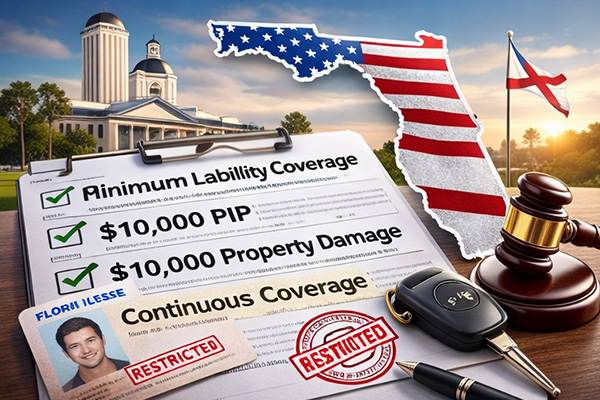
Minimum Liability Coverage in Florida
When filing an SR-22, your auto insurance policy must meet or exceed Florida’s minimum liability limits:
- $10,000 Personal Injury Protection (PIP)
- $10,000 Property Damage Liability (PDL)
Note: While Florida is a no-fault state, SR-22 drivers are often advised to carry higher limits due to elevated legal exposure.
Continuous Coverage Rule
Florida enforces a continuous coverage requirement for SR-22 drivers:
- Any lapse, cancellation, or non-payment is automatically reported
- License suspension may occur immediately
- The SR-22 period often resets after a lapse

3. How to Get SR-22 Insurance in Florida (Step-by-Step)
Many drivers ask: How to get SR-22 insurance in Florida quickly and correctly. The process is straightforward but must be followed precisely.
Step 1: Determine the SR-22 Type
Florida recognizes two main SR-22 policy types:
- Owner SR-22 – for drivers who own a vehicle
- Non-owner SR-22 insurance Florida – for drivers without a car but who still need legal driving privileges
Step 2: Purchase a Qualifying Policy
Not all insurers offer SR-22 filings. You must purchase a policy from a company authorized to file SR-22 forms electronically in Florida.
Step 3: SR-22 Filing Florida DMV
Once coverage is active, the insurer submits the SR-22 filing Florida DMV electronically—often within 24 hours.
Step 4: License Reinstatement
After the state processes the SR-22, you may need to pay reinstatement fees before your driving privileges are restored.

4. Florida SR-22 Insurance Cost: What to Expect
Florida SR-22 insurance cost varies significantly depending on risk factors, but it is consistently higher than standard auto insurance.
Key Cost Factors
- Type of violation (DUI vs. uninsured driving)
- Driving history and points
- Age and location
- Vehicle ownership
- Policy type (owner vs. non-owner SR-22)
Typical Cost Breakdown
| Cost Component | Estimated Range (Annual) |
| SR-22 filing fee | $15 – $50 |
| Base insurance premium increase | +30% to +120% |
| DUI-related surcharge | $1,000 – $3,500 |
| Non-owner SR-22 insurance Florida | $400 – $900 |
Data compiled from Florida insurance market averages and publicly available insurer filings.

5. Cheapest SR-22 Insurance in Florida: Strategic Cost Reduction
Finding the cheapest SR-22 insurance in Florida requires understanding how insurers assess risk.
Proven Cost-Saving Strategies
- Compare at least 5–7 SR-22-friendly insurers
- Choose non-owner SR-22 if you don’t own a car
- Maintain continuous coverage (no lapses)
- Improve credit score (where applicable)
- Avoid additional violations during the SR-22 period
Many Florida drivers overpay simply because they assume SR-22 options are limited—this is not the case.
6. Florida SR-22 Insurance After DUI: Higher Risk, Higher Scrutiny
Florida SR-22 insurance after DUI is the most expensive and restrictive SR-22 category.
DUI-Specific Consequences
- Mandatory SR-22 filing
- Extended filing duration
- Substantial premium increases
- Possible requirement for FR-44 instead of SR-22 in severe cases
DUI drivers are statistically more likely to face policy cancellations, making insurer selection especially critical.

7. How Long Do You Need SR-22 Insurance in Florida?
A common question is: How long do you need SR-22 insurance in Florida?
Standard Duration
- 3 years from the license reinstatement date (most cases)
- Court orders may impose longer periods
Important Compliance Note
The SR-22 clock does not run if:
- Your policy lapses
- Your license is suspended again
- The SR-22 filing is withdrawn
Consistency is essential for successful completion.
8. Non-Owner SR-22 Insurance Florida: Who Should Use It?
Non-owner SR-22 insurance Florida is designed for drivers who:
- Do not own a vehicle
- Borrow or rent cars occasionally
- Need license reinstatement without full auto ownership costs
Key Advantages
- Lower premiums than owner policies
- Meets SR-22 legal requirements
- Ideal for urban drivers or temporary reinstatement needs
However, non-owner SR-22 does not cover vehicles you own or have regular access to.
9. SR-22 Compliance Risks and Common Mistakes
Even informed drivers can fail SR-22 compliance due to:
- Missing a single payment
- Switching insurers without proper SR-22 transfer
- Assuming SR-22 ends automatically
Always confirm SR-22 removal in writing after the required period ends.
Conclusion: SR-22 Insurance Florida Explained Clearly
SR-22 Insurance Florida is a regulatory tool—not a punishment, but a monitoring mechanism designed to protect public financial safety. Understanding Florida-specific SR-22 rules, costs, timelines, and filing processes empowers drivers to regain legal driving status efficiently and at the lowest possible cost.
When handled correctly, SR-22 compliance becomes a temporary administrative requirement, not a long-term financial burden.
If you are navigating SR-22 for the first time—or recovering from a DUI or suspension—accurate information and strategic planning make all the difference.
About the Author