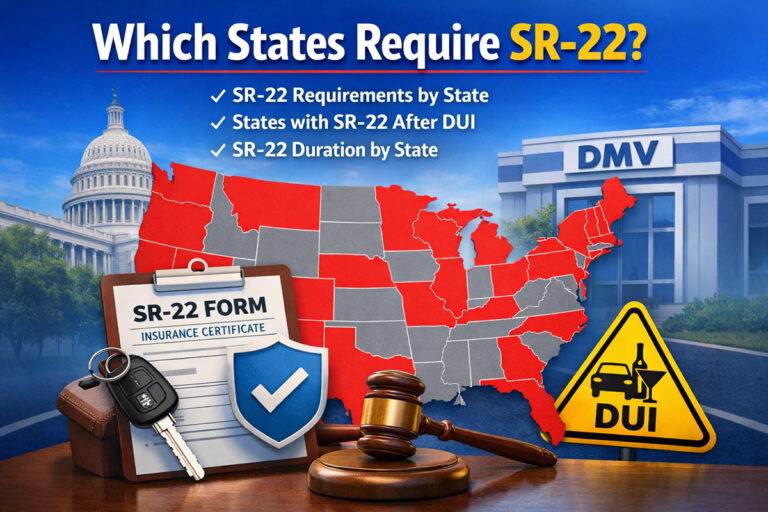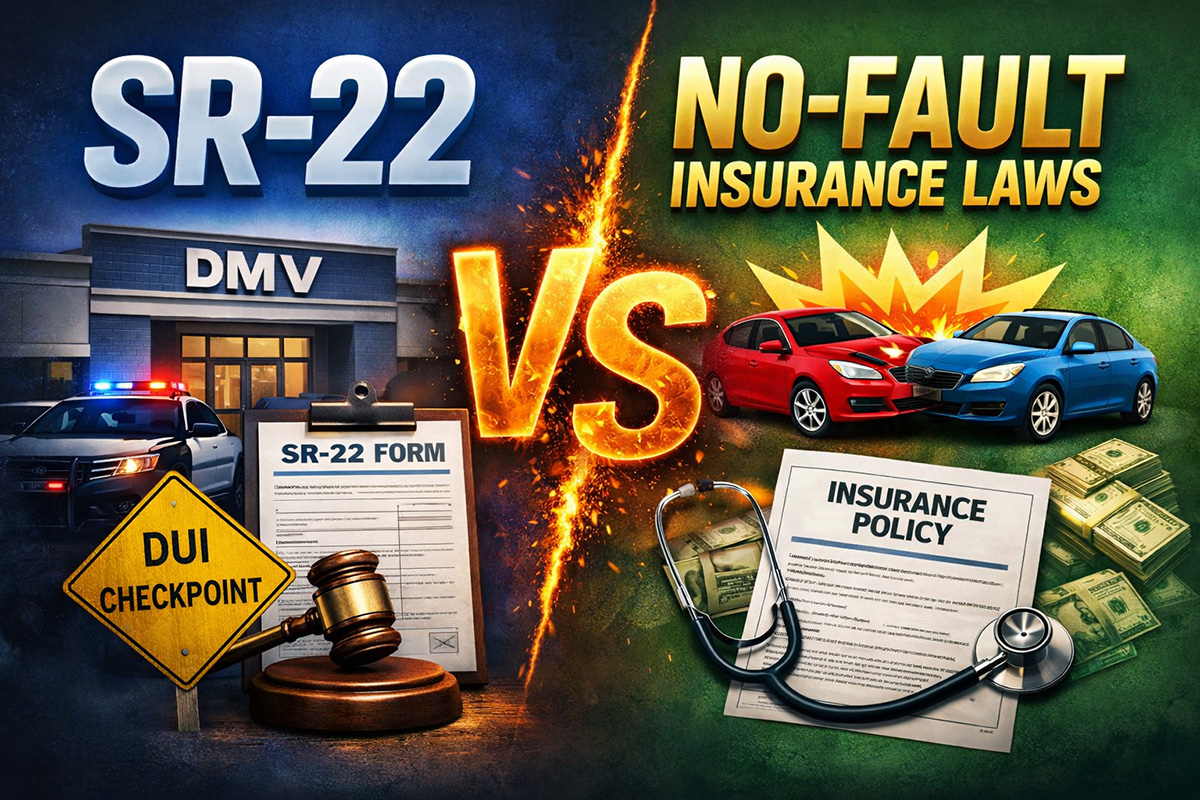
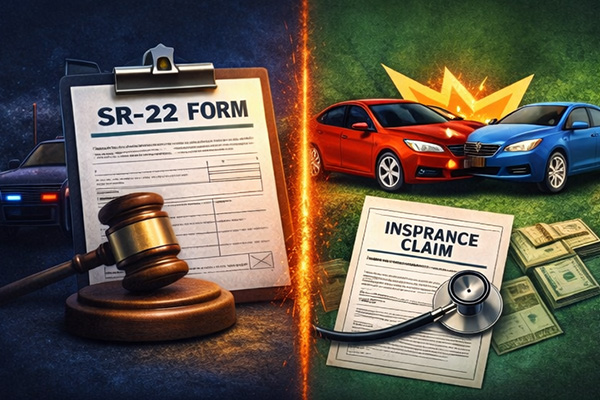
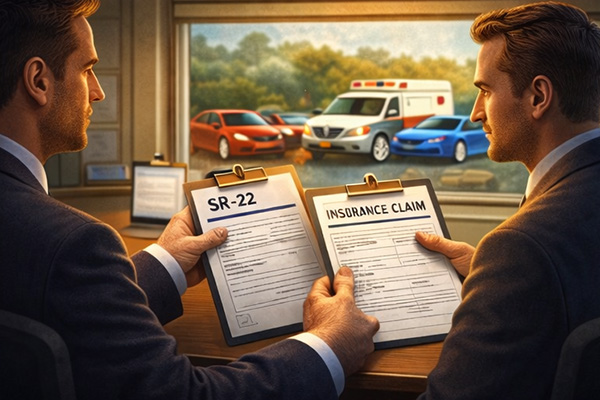
A visual comparison of SR-22 insurance requirements and no-fault auto insurance laws in the United States
Introduction: Understanding SR-22 Within the U.S. Insurance Law Framework
In the United States, auto insurance laws are not uniform. Each state establishes its own legal framework governing financial responsibility, fault determination, and insurance enforcement. Two concepts that often confuse drivers—especially high-risk drivers—are SR-22 filings and no-fault insurance laws. While both are deeply rooted in state insurance regulations, they serve entirely different legal purposes.
This article provides a comprehensive legal and regulatory analysis of SR-22 vs no-fault insurance laws, focusing on how state Departments of Motor Vehicles (DMVs), courts, and insurance regulators apply these systems. Because many drivers mistakenly believe that no-fault insurance laws eliminate the need for SR-22, this guide clarifies the difference between SR-22 insurance and no-fault insurance laws, explains how they intersect, and outlines compliance obligations across states.
As part of the Laws section, this article emphasizes DMV mandates, court-ordered SR-22 filings, and interstate regulatory differences, making it particularly valuable for drivers dealing with DUI convictions, license suspensions, or reinstatement requirements.
What Is SR-22? A Legal Definition
An SR-22 is not an insurance policy. It is a certificate of financial responsibility filed by an insurance company with a state DMV to prove that a driver carries at least the minimum liability coverage required by law.
From a legal perspective, SR-22 functions as an enforcement mechanism. It allows the state to monitor high-risk drivers and ensures continuous insurance coverage for a mandated period—usually 3 to 5 years, depending on the violation and state law.
Common Legal Triggers for SR-22
SR-22 is typically required after:
- DUI / DWI convictions
- Driving without insurance
- Multiple at-fault accidents
- Reckless driving
- License suspension or revocation
- Court-ordered probation related to driving offenses
Failure to maintain SR-22 coverage results in automatic DMV notification, often leading to immediate license re-suspension.

What Are No-Fault Insurance Laws?
No-fault insurance laws govern how car accident claims are handled, not whether a driver must carry insurance. In no-fault states, each driver’s own insurance company pays for medical expenses and certain economic losses, regardless of who caused the accident.
Currently, states such as Florida, Michigan, New York, New Jersey, and Pennsylvania operate under some form of no-fault system.
Legal Purpose of No-Fault Insurance
- Reduce litigation
- Speed up medical payments
- Limit lawsuits to severe injury cases
- Shift medical cost responsibility to Personal Injury Protection (PIP) coverage
Importantly, no-fault laws do not replace liability insurance requirements, nor do they override DMV enforcement mechanisms such as SR-22.

SR-22 Insurance Compared to No-Fault Auto Insurance Laws
When analyzing SR-22 insurance compared to no-fault auto insurance laws, the key distinction lies in legal function:
| Aspect | SR-22 | No-Fault Insurance |
| Legal nature | DMV enforcement filing | Accident claims system |
| Applies after violations | Yes | No |
| Filed with DMV | Yes | No |
| Determines accident fault | No | No (limited relevance) |
| Affects medical payments | Indirect | Direct |
| Court-ordered | Often | Never |
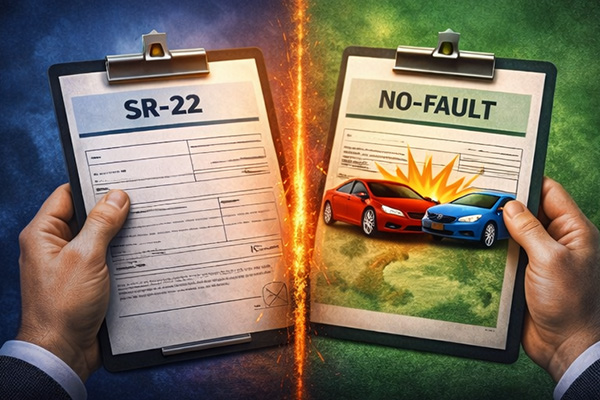
In short, SR-22 enforces driver compliance, while no-fault laws regulate post-accident compensation.
Difference Between SR-22 Insurance and No-Fault Insurance Laws
The difference between SR-22 insurance and no-fault insurance laws can be summarized as follows:
- SR-22 is reactive: triggered by legal or administrative violations.
- No-fault insurance is structural: embedded in a state’s insurance system.
- SR-22 tracks individual drivers.
- No-fault laws apply to all insured drivers equally.
This distinction explains why SR-22 requirements remain fully enforceable even in no-fault states.
Is SR-22 Required in No-Fault Insurance States?
A common misconception is that no-fault states do not require SR-22 filings. Legally, this is incorrect.
The Answer:
Yes, SR-22 is required in no-fault insurance states when mandated by the DMV or courts.
The question “Is SR-22 required in no-fault insurance states?” depends entirely on driver behavior, not the insurance fault model. A DUI conviction in Florida or Michigan still triggers SR-22 or equivalent filings.

How SR-22 Requirements Work in No-Fault States
Understanding how SR-22 requirements work in no-fault states requires examining DMV authority. In every U.S. jurisdiction, the DMV retains the power to:
- Suspend licenses
- Require proof of financial responsibility
- Enforce continuous coverage monitoring
Process Overview:
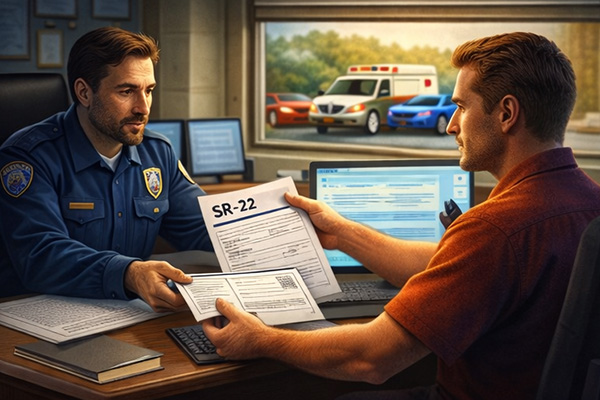
- Court or DMV mandates SR-22
- Driver purchases qualifying insurance
- Insurer files SR-22 with DMV
- DMV monitors coverage status
- Any lapse triggers immediate penalties
No-fault laws do not limit this process.
Do No-Fault States Require SR-22 After DUI?
Yes. Do no-fault states require SR-22 after DUI?
Absolutely.
DUI is a criminal and administrative offense, independent of accident liability. States such as:
- Florida
- Michigan
- New Jersey
- New York
routinely require SR-22 or functionally equivalent filings after DUI convictions.
SR-22 Filing Rules in No-Fault Insurance States
Although SR-22 rules vary slightly by state, SR-22 filing rules in no-fault insurance states generally include:
- Mandatory liability minimums
- Continuous coverage for 3–5 years
- Insurer-issued DMV notification upon cancellation
- Higher premiums due to high-risk classification
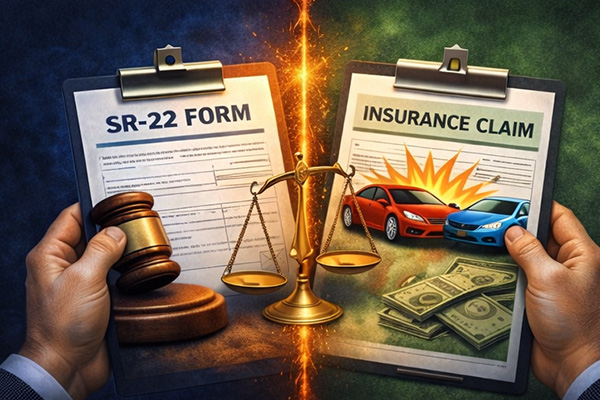
State-Level Data Comparison
| State | No-Fault System | SR-22 Required | Typical SR-22 Duration |
| Florida | Yes | Yes | 3 years |
| Michigan | Yes | Yes | 3–5 years |
| New York | Yes | Yes (FS-25) | 3 years |
| New Jersey | Yes | Yes | 3 years |
| Pennsylvania | Choice no-fault | Yes | 3 years |
Data compiled from state DMV and insurance regulatory filings.
How No-Fault Insurance Laws Affect SR-22 Requirements
From a legal standpoint, how no-fault insurance laws affect SR-22 requirements is limited but important:
Indirect Effects:
- Higher minimum PIP coverage may increase SR-22 policy costs
- Insurers may price risk differently in no-fault states
- Policy structure may be more complex
What They Do NOT Affect:
- Filing obligation
- Duration of SR-22
- DMV enforcement authority
- Court compliance requirements
Thus, no-fault laws influence cost and structure, not legal necessity.
Legal Compliance Risks and Penalties
Failure to comply with SR-22 requirements—regardless of fault system—can result in:
- License re-suspension
- Extended SR-22 periods
- Vehicle registration cancellation
- Additional fines
- Probation violations (if court-ordered)
From a legal compliance perspective, SR-22 obligations override insurance system differences.
Conclusion: SR-22 and No-Fault Laws Serve Different Legal Purposes
The debate around SR-22 vs no-fault insurance laws differences often stems from misunderstanding their roles. In reality:
- SR-22 is a driver monitoring and compliance tool
- No-fault insurance laws are a claims-processing framework
They coexist within U.S. auto insurance law without conflict. High-risk drivers in no-fault states remain fully subject to SR-22 requirements imposed by DMVs and courts.
For drivers navigating license reinstatement, DUI consequences, or insurance compliance, understanding this distinction is critical—not just for legal compliance, but for long-term financial stability.
About the Author