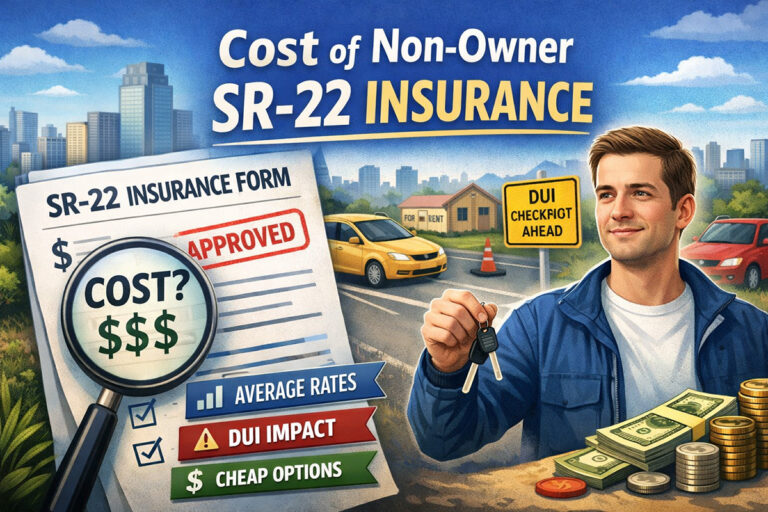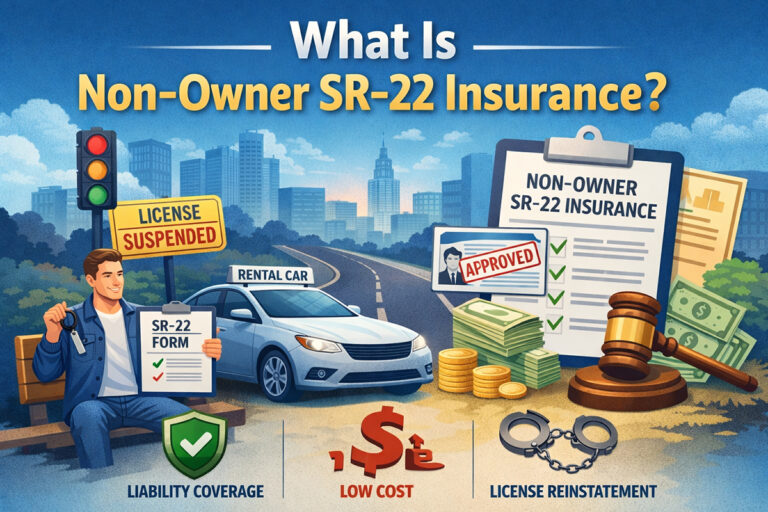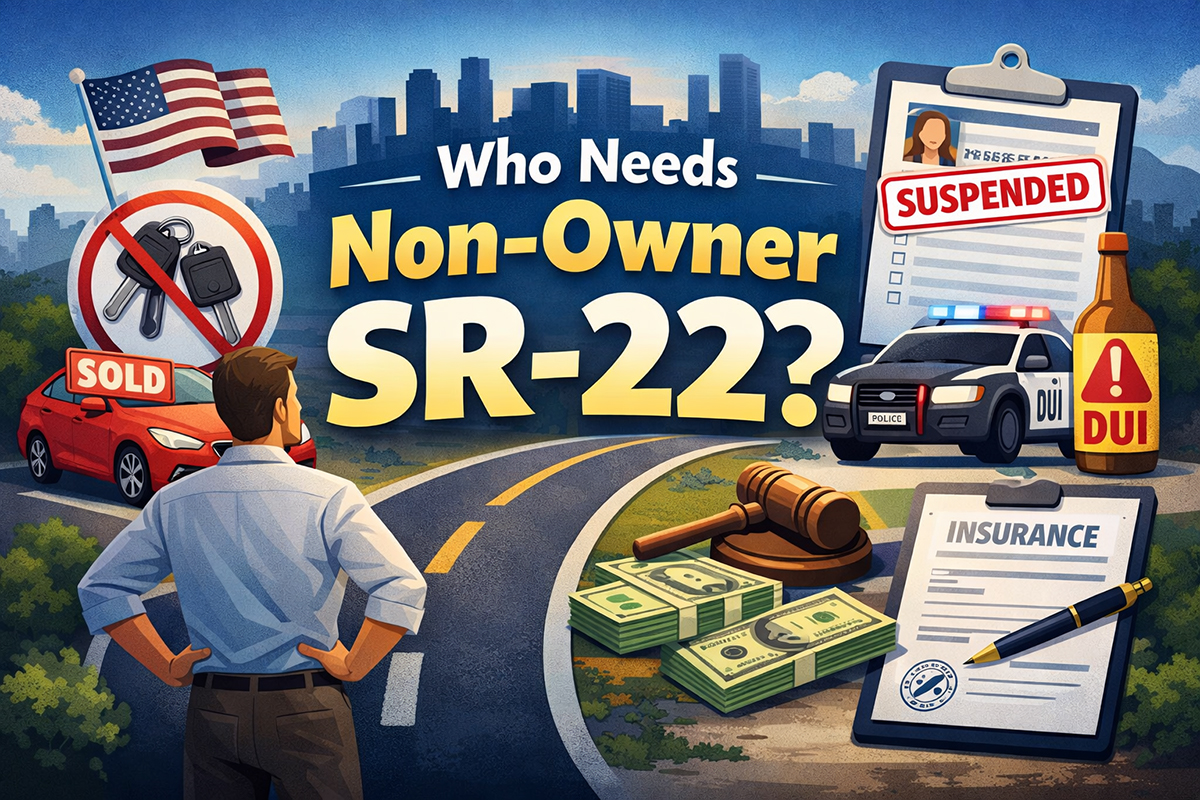
Non-owner SR-22 insurance helps drivers meet legal requirements without owning a vehicle.
A Complete Guide to SR-22 Insurance for Drivers Without a Car
For many drivers in the United States, the requirement to file an SR-22 comes at a difficult moment—often after a serious traffic violation, license suspension, or lapse in insurance. The confusion becomes even greater for people who do not own a vehicle.
If you are asking questions like “Do I need SR-22 if I don’t have a car?” or “How can I keep my license without owning a vehicle?”, you are not alone.
This article is written specifically for non-owner drivers. In this Nonowner category guide, we explain who needs non-owner SR-22 insurance, how it works, when it is required, and how it differs from traditional owner policies. The goal is to help you legally reinstate or maintain your driving privileges while minimizing cost and compliance risk.
1. Understanding SR-22: The Foundation
An SR-22 is not an insurance policy. It is a state-mandated financial responsibility filing submitted by an insurance company to the Department of Motor Vehicles (DMV) or equivalent state agency.
The SR-22 certifies that a driver:
- Carries at least the minimum liability insurance required by state law
- Is continuously insured for a specified period (usually 2–3 years)
SR-22 requirements are imposed on high-risk drivers, including those convicted of DUI, driving without insurance, or repeated serious violations.
Importantly, SR-22 requirements apply to the driver, not the vehicle. This distinction is critical for understanding non-owner SR-22 insurance.
2. Who Needs Non-Owner SR-22 Insurance?
Who needs non-owner SR-22 insurance?
Any driver who is required by the state to file an SR-22 but does not own or regularly drive a vehicle may need a non-owner SR-22 policy.
This type of coverage is designed for individuals who:
- Do not have a car titled in their name
- Do not have regular access to a household vehicle
- Still need to legally drive occasionally (rental cars, borrowed vehicles)
Non-owner SR-22 insurance satisfies state requirements without requiring vehicle ownership.
3. Do I Need Non-Owner SR-22 Without a Car?
A very common question is:
Do I need non-owner SR-22 without a car?
In most cases, the answer is yes, if:
- Your license is suspended or restricted
- The DMV requires an SR-22 filing
- You want to reinstate or maintain driving privileges
Even if you do not plan to drive, many states require continuous SR-22 coverage to avoid:
- Extended suspension periods
- Restarting the SR-22 clock
- Additional fines or penalties
Failing to maintain SR-22 coverage—even without driving—can result in automatic license re-suspension.

4. When Is Non-Owner SR-22 Required?
When is non-owner SR-22 required?
Typically, states mandate SR-22 filings after high-risk violations such as:
- DUI or DWI convictions
- Driving without insurance
- Driving on a suspended or revoked license
- At-fault accidents without coverage
- Accumulation of excessive points
If you do not own a vehicle at the time of the requirement, the state still expects proof of financial responsibility. A non-owner SR-22 policy fulfills this obligation.
5. Non-Owner SR-22 Insurance Requirements
Although rules vary by state, non-owner SR-22 insurance requirements generally include:
- Meeting state minimum liability limits
- Continuous coverage for 2–3 years
- Insurance company filing SR-22 directly with the DMV
- No ownership or regular access to a vehicle
Typical Liability Limits (Examples)
- Bodily Injury per person
- Bodily Injury per accident
- Property Damage
Non-owner policies do not cover physical damage to vehicles and do not include comprehensive or collision coverage.
6. Non-Owner SR-22 for Suspended License
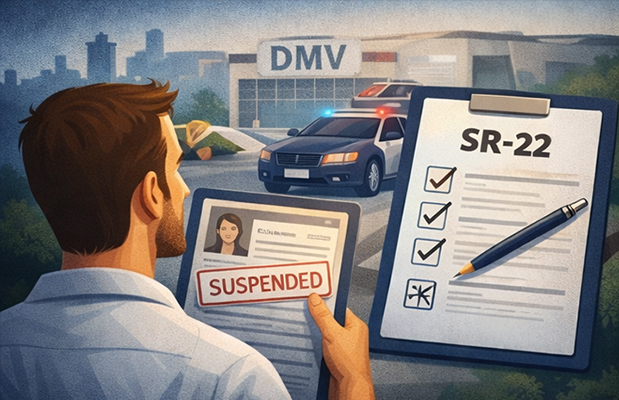
A non-owner SR-22 for suspended license situations is one of the most common use cases.
If your license is suspended due to:
- DUI
- No insurance
- Serious traffic violations
The DMV may require:
- Proof of insurance (SR-22)
- Payment of reinstatement fees
- Completion of suspension period
Without an SR-22 filing, license reinstatement is not possible, even if you do not own a vehicle.
7. Non-Owner SR-22 After DUI
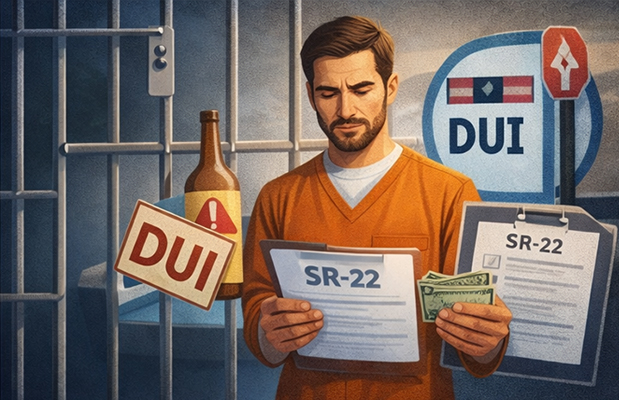
A non-owner SR-22 after DUI is frequently required when:
- The DUI did not involve your own vehicle
- You sold your car after the offense
- You plan to delay vehicle ownership
DUI-related SR-22 requirements are typically:
- Longer in duration (often 3 years)
- More expensive
- Strictly monitored
However, non-owner SR-22 insurance is often significantly cheaper than owner SR-22 policies, making it an effective compliance solution.
8. Non-Owner SR-22 for Driving Without Insurance
If you were cited for driving without insurance, the state may require:
- An SR-22 filing
- Proof of future financial responsibility
A non-owner SR-22 for driving without insurance applies when:
- You were driving someone else’s vehicle
- You no longer own a car
- You want to avoid buying a vehicle just to file SR-22
This approach allows you to remain compliant while reducing unnecessary expenses.
9. Non-Owner SR-22 vs Owner SR-22 Insurance
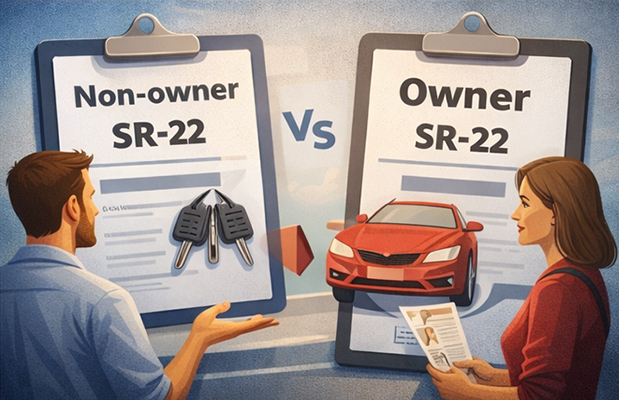
Understanding non-owner SR-22 vs owner SR-22 insurance is essential for choosing the correct policy.
| Feature | Non-Owner SR-22 | Owner SR-22 |
| Vehicle ownership required | ❌ No | ✅ Yes |
| Covers owned vehicle | ❌ No | ✅ Yes |
| Liability coverage | ✅ Yes | ✅ Yes |
| Physical damage coverage | ❌ No | Optional |
| Average cost | Lower | Higher |
| Best for | Drivers without cars | Car owners |
Choosing the wrong type can lead to policy cancellation or DMV rejection.
10. Real-World Cost Data: Non-Owner SR-22 Insurance
Below is a representative cost comparison table based on aggregated market data from high-risk insurance providers across multiple states.
Average Annual Cost of SR-22 Insurance (Non-Owner)
| State | Non-Owner SR-22 | Owner SR-22 |
| California | $350 – $550 | $1,200 – $2,000 |
| Texas | $300 – $500 | $1,100 – $1,800 |
| Florida | $400 – $700 | $1,500 – $2,500 |
| Illinois | $250 – $450 | $1,000 – $1,700 |
| Arizona | $280 – $480 | $1,050 – $1,600 |
Actual costs vary based on violation type, driving record, and insurer.
11. SEO Considerations: Why Non-Owner SR-22 Content Matters
From an SEO perspective, non-owner SR-22 is a high-intent niche with:
- Low competition relative to general SR-22 terms
- Strong commercial intent
- High CPC in Google Ads
Search queries like “Who needs non-owner SR-22 insurance” and “Do I need non-owner SR-22 without a car” reflect immediate compliance needs, making them ideal for lead generation.
12. Common Mistakes to Avoid
Many drivers make costly errors, including:
- Buying owner SR-22 without owning a vehicle
- Letting SR-22 lapse during suspension
- Assuming SR-22 is optional if not driving
- Choosing insurers unfamiliar with SR-22 filings
These mistakes often result in longer suspensions and higher costs.
13. Final Thoughts: Is Non-Owner SR-22 Right for You?
If you are legally required to file an SR-22 and do not own a vehicle, a non-owner SR-22 policy is often the most practical, affordable, and compliant solution.
It allows you to:
- Reinstate or maintain your license
- Stay compliant with DMV requirements
- Avoid unnecessary vehicle ownership costs
- Transition smoothly to an owner policy later if needed
Understanding who needs non-owner SR-22 insurance is the first step toward regaining control of your driving future.
Next Steps
If you are unsure which SR-22 option applies to your situation, compare state-specific non-owner SR-22 requirements, pricing, and filing rules before purchasing a policy.
A correctly filed SR-22 today can save you years of complications tomorrow.
About the Author