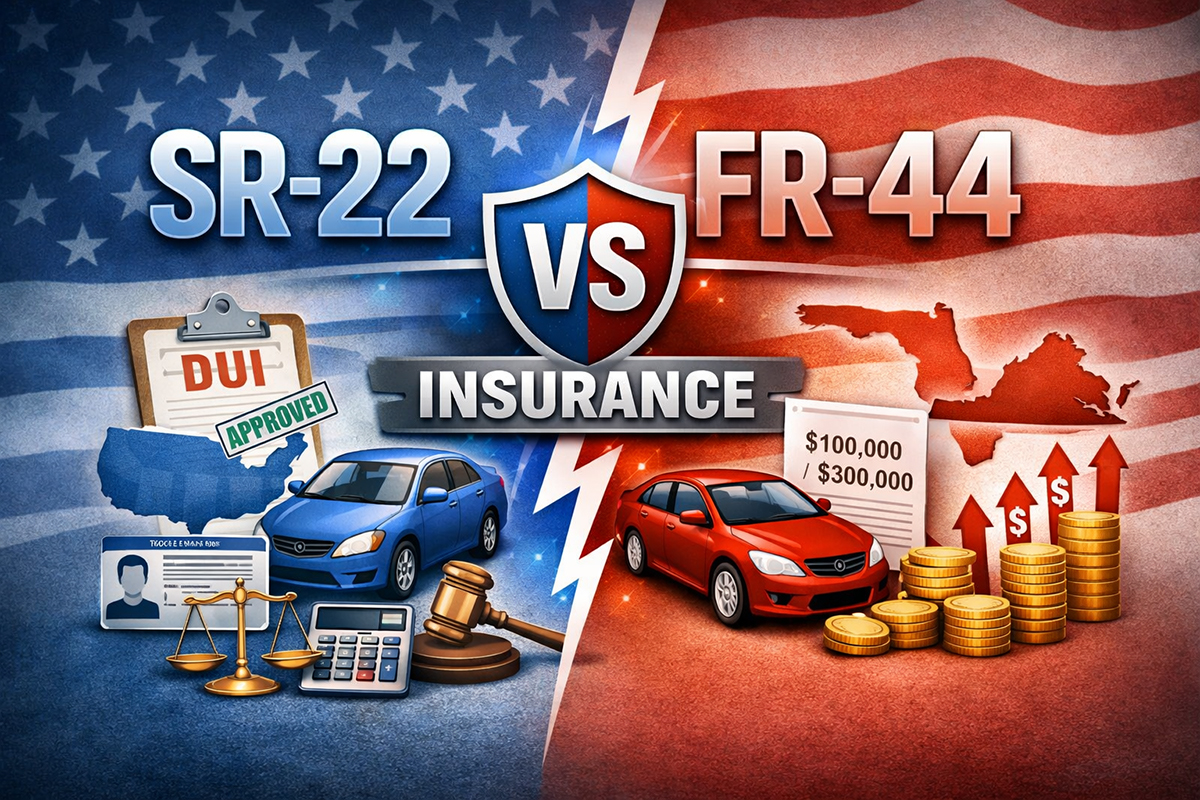
A side-by-side comparison of SR-22 and FR-44 insurance, highlighting key differences in requirements, costs, and state rules.
When drivers are classified as high-risk after serious traffic violations, states often require special insurance filings to prove financial responsibility. The two most common forms are SR-22 insurance and FR-44 insurance. While they are often mentioned together, they are not the same, and choosing the wrong one can delay license reinstatement or lead to further penalties.
This in-depth guide provides a complete comparison of SR-22 vs FR-44 insurance, focusing on requirements, costs, DUI implications, state rules, and DMV filing procedures. By the end, you’ll clearly understand which option applies to your situation and why SR-22 remains the most widely required filing nationwide.
What Is SR-22 Insurance?
Before comparing SR-22 and FR-44, it’s essential to understand what SR-22 insurance actually is.
An SR-22 is not a type of insurance policy. Instead, it is a certificate of financial responsibility filed by your insurance company with your state’s Department of Motor Vehicles (DMV). The SR-22 proves that you carry at least the minimum liability insurance required by law.
Common Reasons SR-22 Is Required
- DUI or DWI conviction
- Driving without insurance
- Multiple traffic violations
- License suspension or revocation
- At-fault accidents without coverage
Because of these violations, SR-22 is considered part of high-risk insurance, a category that includes drivers statistically more likely to file claims.

What Is FR-44 Insurance?
FR-44 insurance is similar in structure to SR-22 but significantly more strict.
Like SR-22, FR-44 is a state-mandated filing submitted to the DMV. However, FR-44 requires much higher liability limits, often double or triple the minimum coverage required for SR-22.
Why FR-44 Exists
FR-44 was created specifically to address serious DUI and repeat DUI offenses, ensuring that high-risk drivers carry substantially more financial protection in case of another incident.

SR-22 vs FR-44 Insurance Differences (Core Comparison)
Understanding the SR-22 vs FR-44 insurance differences begins with their purpose and scope.
| Feature | SR-22 | FR-44 |
| Filing Type | Proof of minimum liability | Proof of elevated liability |
| Coverage Limits | State minimum | Much higher than minimum |
| Typical Trigger | DUI, no insurance, violations | Serious or repeat DUI |
| Availability | Most U.S. states | Limited states only |
| Cost Impact | Moderate increase | Significant increase |
The most important distinction is that FR-44 is essentially a stricter version of SR-22, applied in fewer states and only for the most severe violations.

SR-22 vs FR-44 Insurance Requirements
One of the most searched topics is SR-22 vs FR-44 insurance requirements, especially after a DUI.
SR-22 Insurance Requirements
- Maintain continuous liability coverage
- Meet state minimum limits
- Filing period usually 3 years
- Insurance company must notify DMV if policy lapses
FR-44 Insurance Requirements
- Carry much higher liability limits
- Continuous coverage required with zero lapses
- Filing period typically 3 to 5 years
- Immediate license suspension if coverage drops
Failing to maintain either filing can reset your required period or lead to additional penalties.

SR-22 vs FR-44 After DUI Conviction
A DUI is the most common reason drivers encounter these filings. However, the outcome depends heavily on state law and offense severity.
SR-22 After DUI
In most states, a first-time DUI results in an SR-22 requirement. This applies whether the driver owns a vehicle or needs non-owner SR-22 insurance.
FR-44 After DUI
FR-44 is generally reserved for:
- High BAC levels
- Repeat DUI offenses
- States seeking enhanced financial accountability
This makes SR-22 vs FR-44 after DUI conviction a critical distinction—choosing the wrong filing can delay license reinstatement.

SR-22 vs FR-44 Insurance Cost Comparison
Cost is often the deciding factor, and the SR-22 vs FR-44 insurance cost comparison clearly favors SR-22.
Average Cost Impact
- SR-22 filing fee: $15–$50 (one-time)
- Insurance premium increase: 20%–60%
- FR-44 premium increase: 2–3x higher than SR-22
The higher liability limits required by FR-44 significantly increase premiums, even for drivers with otherwise clean records.

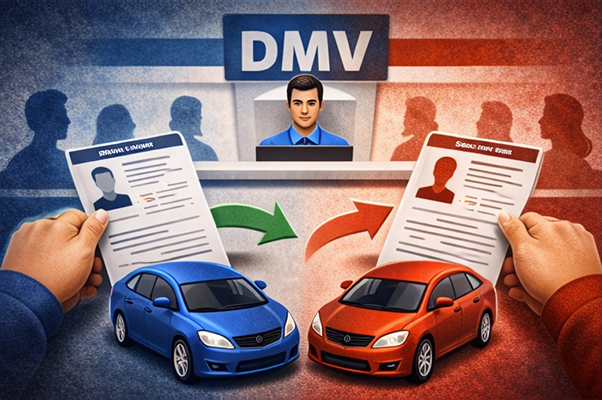
SR-22 vs FR-44 Filing Requirements with DMV
Another key difference lies in how each form interacts with the DMV.
SR-22 Filing Process
- Purchase qualifying insurance
- Insurer files SR-22 electronically with DMV
- DMV reinstates or maintains license
FR-44 Filing Process
- Purchase high-limit liability insurance
- Insurer files FR-44 form
- DMV verifies elevated coverage before reinstatement
In both cases, you cannot file these forms yourself—only an authorized insurance company can submit them.
This makes SR-22 vs FR-44 filing requirements with DMV largely similar procedurally, but stricter financially for FR-44.
SR-22 vs FR-44 Insurance by State
State law ultimately determines which filing applies. This is why SR-22 vs FR-44 insurance by state is one of the most important considerations.
States That Use FR-44
- Florida
- Virginia
In these states, drivers with qualifying DUI convictions must carry FR-44 instead of SR-22.
States That Use SR-22
- California
- Texas
- Illinois
- Ohio
- Arizona
- Washington
- And most other U.S. states
For drivers who move between states, the requirement usually follows the state of conviction, not residency.

SR-22 vs FR-44: Which One Do I Need?
The question “SR-22 vs FR-44 which one do I need” has a straightforward answer:
- If your state requires FR-44, you must file FR-44
- If your state does not recognize FR-44, SR-22 applies
- You cannot choose between them—they are legally mandated
Always confirm requirements directly with:
- Your DMV
- Your court order
- A licensed SR-22 insurance provider
SR-22 vs FR-44 High-Risk Insurance Explained
Both filings fall under the category of high-risk insurance, but SR-22 is far more common and flexible.
Why SR-22 Is the Core High-Risk Solution
- Available nationwide
- Lower minimum coverage requirements
- Compatible with non-owner policies
- Easier to maintain long-term
This makes SR-22 vs FR-44 high-risk insurance explained a comparison of accessibility vs severity. FR-44 is reserved for extreme cases, while SR-22 serves as the standard compliance tool for most high-risk drivers.
How Long Do You Need SR-22 or FR-44?
Although durations vary by state, general timelines include:
- SR-22: 2–3 years
- FR-44: 3–5 years
Any lapse—even a single day—can restart the clock.
How to Lower Costs While Carrying SR-22
Since SR-22 is the dominant filing nationwide, cost reduction strategies focus primarily on SR-22 policies:
- Compare multiple high-risk insurers
- Consider non-owner SR-22 if eligible
- Maintain continuous coverage
- Improve driving record over time
Final Thoughts: Why SR-22 Matters More Than FR-44
While both filings serve similar legal purposes, SR-22 remains the backbone of high-risk insurance compliance in the United States. FR-44 is limited, stricter, and far more expensive—used only in specific states and circumstances.
For most drivers, understanding SR-22 vs FR-44 insurance means recognizing that:
- SR-22 is more flexible
- SR-22 is more affordable
- SR-22 applies in most states
- SR-22 is the most practical path to license reinstatement
If you’re facing a suspension or DUI-related insurance requirement, knowing whether SR-22 or FR-44 applies can save you time, money, and unnecessary stress.
About the Author